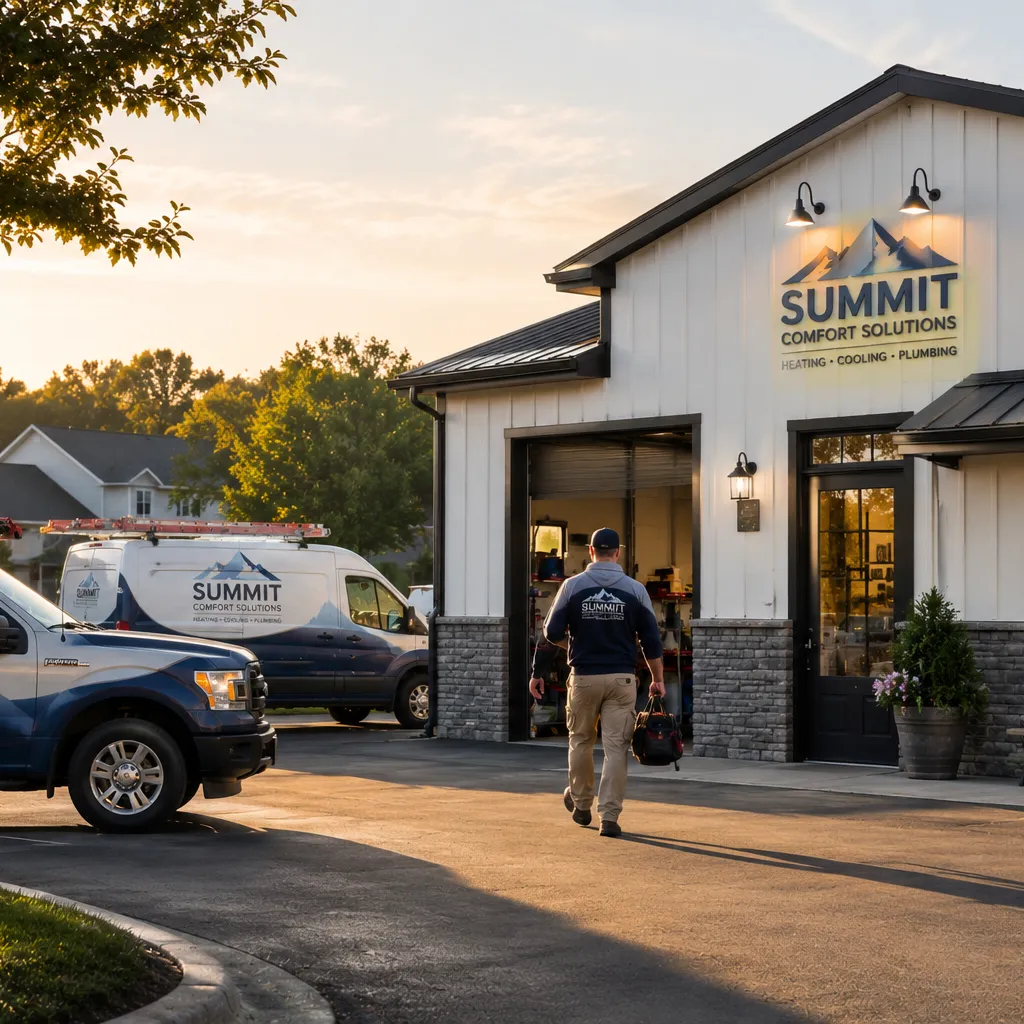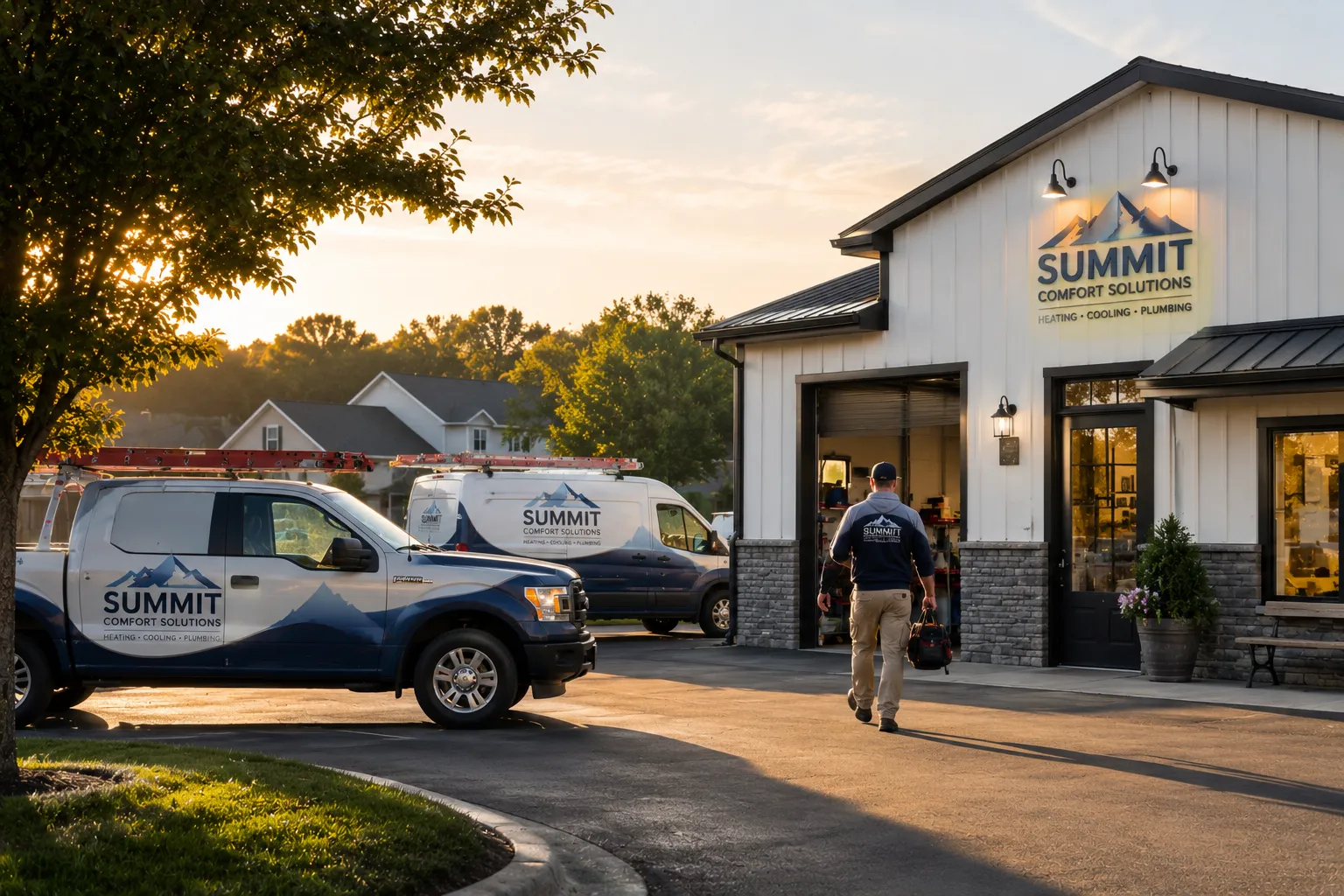

The Anti-Franchise Strategy for Home Service Companies

Why independent HVAC, plumbing, and electrical companies can win by making local accountability impossible to ignore
Two kinds of large competitors are reshaping local home services markets, and from the curb they can look like the same threat.
One is the private equity roll-up, the firm that buys established independents and consolidates them under new ownership. The other is the national franchise, the recognizable name that opens a location in your market with a polished fleet and a grand-opening campaign behind it.
Both arrive with more capital and more brand presence than you have. Both make owner-operators nervous. And the instinct, in both cases, is often to respond by looking more like them.
That instinct is wrong, and it is wrong for a specific reason: the two threats are not the same animal.
Competing against a PE roll-up is largely about transition windows, because the roll-up usually buys an existing local business and inherits the relationships that came with it. The franchise enters differently. It arrives as a system, a name, and a playbook engineered to work across many markets at once.
That difference changes everything about how you compete.
PE roll-ups and franchises create different openings
A PE-backed roll-up usually buys a local company and changes what already exists. A franchise usually enters with a national name, a standardized operating system, and a playbook designed to work across many markets.
Those are different threats, and they create different openings.
- Against a PE roll-up: the opportunity is often the transition window.
- Against a franchise: the opportunity is local contrast.
The roll-up may disrupt relationships that already existed in the market. The franchise usually has to build those relationships from scratch under a brand that was created somewhere else.
That is the opening.
A franchise is a system before it is a neighbor
What you are competing against is not just a plumbing company, HVAC company, or electrical company. It is a licensing model operating through a local business.
The local franchisee may be a good operator. They may be locally based. They may hire local people and do good work. But they bought the right to operate under a recognized brand and run a proven set of systems. In exchange, they pay for that brand, that support, and that operating model.
In home services, franchise royalties and marketing fund contributions vary by brand, but the structure is consistent: a meaningful percentage of gross revenue is often committed to the franchisor or shared brand system before the local business covers payroll, vehicles, equipment, local marketing, and overhead.
Run the math on a shop doing two million in revenue. If combined royalties and brand fund contributions equal 8 percent, that is roughly $160,000 a year committed to the franchise system. That may be a reasonable trade for the franchisee. They are paying for brand recognition, systems, training, marketing support, and a model they believe will help them grow.
But it still changes the economics.
It affects margin. It affects pricing flexibility. It affects reinvestment capacity. And it changes the kind of local story the company can tell.
You are not competing against a bad business model. You are competing against a different business model, with different strengths and different constraints.
The playbook is a feature and a constraint at the same time
The reason franchises scale is standardization.
Same brand standards. Similar scripts. Similar pricing structures. Similar diagnostic processes. Similar customer experience expectations across market after market.
For the franchisor, that consistency is the product. For the customer, it can be reassuring. A recognizable name reduces uncertainty, especially for homeowners who do not already have a trusted local company to call.
That is where franchises are often strongest: with customers who have no existing relationship, need a fast answer, and recognize the name before they recognize any local operator.
But consistency has a tradeoff.
For the customer in your town, the franchise is built to deliver consistency before specificity.
That sounds like a small thing until you watch it play out on a real job. The non-standard repair. The eighty-year-old house with the boiler nobody makes parts for anymore. The electrical panel in a neighborhood where half the homes were remodeled three different times. The customer who needs an honest “you do not need to replace this yet” instead of the recommended path the system points toward.
Franchise operators can be excellent technically, and many are. But the model rewards running the play. The play was written for repeatability, not for the specific house, neighborhood, customer history, and local conditions in front of them.
You are not bound to the same play.
You can read the situation, exercise judgment, and decide in a morning huddle to do something different. You can change the offer, adjust the follow-up, create a neighborhood-specific message, or build around a service category the national brand treats as secondary.
Standardization is what allows the franchise to be recognizable everywhere. It is also what can prevent it from being precisely right in one place.
The franchise sells certainty before it sells quality
The franchise does not always win because the homeowner believes it is the best choice. It often wins because the homeowner believes it is the safest choice.
That distinction matters.
Before a homeowner calls, three questions are running in the background: Will they show up? Can I trust the technician? Will I regret the price?
A national franchise answers those questions with familiarity, polish, and process. That is its real advantage. Not necessarily better workmanship. Not necessarily better value. Lower perceived risk.
That matters because home services is a high-anxiety category. The customer may have an urgent problem, limited technical knowledge, little time to compare options, and a real fear of being taken advantage of. They are inviting a stranger into the home to diagnose a problem they may not understand and recommend work they may not be able to evaluate.
In that environment, familiarity carries enormous value.
The independent operator’s job is to reduce uncertainty in a different way: through visible local proof, clear expectations, named people, specific expertise, and a track record the customer can recognize in their own market.
The franchise lowers doubt with a familiar name. You lower doubt with a more believable local relationship.
The brand belongs to the system
Here is the difference that compounds.
When a homeowner builds a relationship with a national franchise, the relationship is often mediated by the brand. The name, logo, scripts, offers, uniforms, and customer promise are designed to work beyond any one local owner or technician.
That is part of the point. The brand needs to be transferable. The technician can leave. The franchisee can sell the territory. The local manager can change. The name on the truck stays the same because the system was designed to survive those changes.
When a homeowner builds a relationship with an independent company, the relationship can be more specific.
The owner is here. The decisions are made here. The reputation was built here. The technicians are known here. The company history belongs to this market, not to a brand manual.
That is not a marketing line you buy from a franchisor. It is an asset built through years of showing up, solving problems, standing behind work, answering the phone, supporting the community, and being accountable when something goes wrong.
This is the trade at the center of the whole strategy.
The franchise traded some local specificity for reach, recognition, and repeatability. Your job is not to apologize for lacking that reach. Your job is to make your deeper local accountability impossible to ignore.
The framework: four moves for the independent operator
You cannot out-advertise a national marketing fund. You cannot put a name on your trucks that homeowners already recognize from another city. You do not need to.
Competing against the franchise model comes down to four moves, and every one of them targets a constraint the franchise cannot easily remove.
Say the things their model makes harder to say. A franchise location may be locally owned, but the brand, operating system, marketing standards, and customer promise usually come from somewhere else. You can tell a different story: the owner is here, the decisions are made here, the reputation was built here, and more of the customer relationship stays connected to the local company.
This is not an attack on the franchise. It is simply making your local accountability visible in a way a national system has a harder time matching.
Compete on judgment, not on script. Franchises sell consistency, and consistency is genuinely valuable for routine work. So do not fight them only on the routine. Win the jobs where judgment matters more than a script: older homes, complicated retrofits, recurring system problems, non-standard diagnostics, and customers who want someone to slow down and think.
Tune your positioning around the expertise a playbook cannot deliver. When the job is simple, a standardized process can feel reassuring. When the job is complicated, “we do it the same way everywhere” can become less persuasive.
The franchise does not always win because it feels better. It wins because it feels safer.
Become the safer local choice. The franchise lowers perceived risk with familiarity. You can lower it with specificity. Show the real owner, the real technicians, the real neighborhoods, the real work, and the real expectations before the customer has to decide.
Clear service-call fees, two-hour arrival windows, technician photos and bios, project spotlights, named reviews, workmanship guarantees, and owner-led communication all reduce doubt. The more uncertainty you remove, the less the homeowner needs the national name to feel safe.
Owner-recorded videos. Real technician profiles. Project spotlights from recognizable neighborhoods. Local sponsorships people actually see. An owner’s letter in the mailer instead of a corporate template. Photos of real work, real homes, real trucks, real customers, and real team members.
Show the boiler replacement in the older neighborhood everyone knows. Show the panel upgrade in the lake-home community. Show the technician who has been with you for twelve years. Show the fundraiser your team actually attended. Show the seasonal problem your company understands because you see it every year.
Specific proof beats generic reassurance.
The franchise can buy reach. It cannot easily manufacture the specific proof that your company is of this place. Lean into the things that do not scale, because that is exactly where your advantage lives.
Compound the relationships they have to keep buying. A franchise entering your market often needs to create demand through paid visibility. That is not wrong. It is part of how the model grows. But it also means many customer relationships begin as acquired leads.
Your edge is the customers you already have.
Reactivate past customers with a structured follow-up system. Chase down unsold estimates. Build membership programs that turn one repair into a decade of service. Send seasonal reminders before peak demand. Ask for reviews, referrals, and repeat business while the relationship is still warm.
This is revenue that does not require you to outbid a national ad budget for a click. It runs on relationships you have already earned, strengthened by systems that keep your company visible after the job is complete.
The threat is real, and so is your position
None of this means the franchise is harmless.
A recognizable name and a steady advertising presence will pull business, especially from homeowners who have no existing relationship and just want a name they have heard before. You will lose some of those customers. That is part of the market.
But those are not the only customers worth building around.
What the franchise has a harder time taking is the ground that depends on being specifically, locally, and personally accountable. The customer who values judgment. The homeowner who wants the same company back next season. The neighborhood that knows your technicians. The older home where experience matters. The customer who wants to know who stands behind the work when the job gets complicated.
The contractor who watched that franchise open down the street did not win by becoming a smaller version of it. He won by becoming more clearly the thing it could not easily be, and by saying so before the franchise’s marketing defined the conversation for him.
The chain in your market is not your problem. It is your contrast. The only real question is whether you have built the position to make that contrast obvious before homeowners decide on their own.
Build the contrast before they build the brand
If a national franchise has entered your market, the answer is not to imitate their polish or match their ad spend.
The answer is to define the local contrast they cannot easily copy, make that contrast visible, and build the customer systems that turn local trust into repeat revenue.
Service Labs Group helps independent HVAC, plumbing, and electrical companies identify the strongest position in their market before larger competitors define the conversation for them.
The Anti-Franchise Strategy for Home Service Companies Read More »