
Branding

Competing 5-star Reviews

Beyond 5-Star Reviews: How to Command Premium Prices

Competing 5-star Reviews

If you’re running a well-reviewed HVAC, plumbing, or electrical company but still feel constant pressure to discount or justify your pricing, the problem isn’t your reputation. It’s that reviews no longer create meaningful separation. This article explains why five-star ratings have become table stakes, and what actually allows home service companies to command higher prices.

When Everyone Has Great Reviews, Nobody Stands Out

Open Google Maps and search for HVAC contractors, plumbers, or electricians in your market. Count how many have ratings above 4.5 stars. In most markets, it’s nearly all of them.

Now ask yourself: if you and your top five competitors all have excellent reviews, what exactly do those reviews differentiate?

Nothing. That’s the uncomfortable answer.

Five-star reviews have become the participation trophy of home services marketing. Twenty years ago, a strong review profile set you apart. Today, it just means you showed up and did your job without causing problems.

The customer who reads your 4.8-star rating and then checks your competitor’s 4.7-star rating isn’t going to pay you 30% more based on that difference. They can’t even perceive a meaningful difference.

This is the trap most home service companies fall into. They obsess over collecting reviews because that’s what they’ve been told matters. They hit 200 five-star reviews and wonder why they’re still competing on price against the company down the street with 180.

The answer is simple: reviews have become table stakes. They’re the minimum requirement to be considered, not the reason to be chosen.

Building a premium home service brand requires moving beyond what everyone else is doing and into territory that actually creates separation.

Table Stakes vs. True Differentiation

Table stakes are the things customers expect from any competent service provider. They’re necessary, but they don’t justify premium pricing because they’re not distinctive.

In home services, the list of table stakes has grown substantially over the past decade.

Reviews above 4.5 stars? Table stakes. Licensed, bonded, and insured? Table stakes. Background-checked technicians? Table stakes. Showing up when you say you will? Table stakes. Clean trucks and uniformed crews? Table stakes. Responding quickly to inquiries? Table stakes.

None of these create pricing power because none of them are rare.

Every serious competitor in your market either has them or is actively working on them. When you lead with these credentials in your marketing, you’re essentially announcing that you meet the minimum requirements.

That’s not premium positioning. That’s parity.

True differentiation lives in a different space entirely. It’s not about being competent. It’s about being meaningfully distinct in ways your competitors can’t—or won’t—replicate.

The Brand Equation Most Contractors Get Wrong

Most home service companies approach branding backward. They start with tactics—logos, truck wraps, uniforms, websites—and hope those surface-level elements somehow create a premium perception.

But branding isn’t a coat of paint you apply to your business. It’s the accumulated experience customers have with your company at every touchpoint.

A premium brand isn’t built through design choices alone. It’s built through strategic decisions about how you operate, who you serve, and what you’re known for beyond the basic service you provide.

Consider two HVAC companies.

Company A has a polished website, professional truck wraps, and a clean logo. They offer heating and cooling services to anyone who calls. Their marketing emphasizes their 4.9-star rating, fast response times, and “quality workmanship.”

Company B looks just as professional. But they’ve built their business around a documented, named diagnostic process. Their technicians are trained to explain not just what’s wrong, but why it happened and how to prevent it from happening again. They specialize in older homes with known HVAC challenges. Their follow-up system reaches out proactively before seasonal peaks.

When customers describe Company B to friends, they don’t say “they were good.” They describe specific experiences.

Company B charges roughly 25% more, and closes at higher rates. Not because their trucks are shinier, but because their brand is built on differentiated experience rather than aesthetic similarity.

The Four Dimensions of Premium Brand Building

Premium positioning is built across four interconnected dimensions: how you deliver service, what you know, how customers experience you, and who you intentionally serve.

Most companies focus on only one or two. That’s why they struggle to escape price competition despite having a “nice brand.”

Proprietary process is the first dimension. This means developing documented, named systems that define how you deliver service. A 15-Point Safety Inspection. A Comfort Assurance Protocol. A Same-Day Resolution Process.

The key isn’t inventing new technical procedures. It’s codifying what you already do well in ways customers can understand, remember, and reference when recommending you.

Demonstrated expertise is the second dimension. Reviews say you did good work. Demonstrated expertise shows you understand things other contractors don’t.

This might mean educational content tailored to specific systems, specialization in certain home types, or diagnostic capabilities that go beyond surface-level problem identification. The goal is to create the perception—backed by reality—that you know things others don’t.

Experience architecture is the third dimension. This includes every interaction a customer has with your company, from their first website visit to post-service follow-up.

Premium brands don’t leave these moments to chance. They design them. The confirmation text that introduces the technician by name. The explanation approach that educates rather than overwhelms. The follow-up that feels intentional instead of automated.

Market positioning is the fourth dimension. This defines who you’re for, who you’re not for, and how clearly that distinction comes across.

Premium brands don’t try to appeal to everyone. They’re willing to lose price-sensitive customers to win quality-focused ones. They position themselves against the budget option instead of competing with it.

Why Reviews Can’t Do the Heavy Lifting

Reviews function as social proof. They tell prospects that other people had acceptable experiences.

But social proof only creates advantage when it’s scarce.

When every competitor has hundreds of positive reviews, the proof becomes meaningless. You’re all socially validated. Now what?

Here’s what reviews actually tell a homeowner: you probably won’t have a terrible experience.

That’s useful information. It’s just not pricing power.

Premium pricing requires answering a different question. Not “will I be satisfied?” but “why should I pay this company more than the others who would also leave me satisfied?”

Reviews can’t answer that question. They speak to baseline competence, which is now expected.

Maintain your review strategy. Just stop expecting it to elevate you.

Building Proof That Actually Differentiates

Most companies think proof means testimonials. Premium brands know proof means documentation.

Case studies that detail specific problems, diagnosis, and outcomes demonstrate differentiation far more effectively than generic praise. They show how you think, not just that customers liked you.

Visual documentation—before, during, and after—lets prospects see complexity, care, and execution quality that reviews can’t capture.

Third-party validation beyond customer reviews adds credibility. Manufacturer recognition, specialized certifications, media features, and speaking roles all signal that people other than your customers consider you exceptional.

Educational content that consistently teaches homeowners positions you as an authority, not just a provider. This kind of differentiation can’t be replicated with marketing language alone.

The Brand Compounding Effect

Brand building compounds in ways tactical marketing never will.

Ads work while you pay for them. When you stop, the results stop.

Brand investments accumulate. Each case study adds to your proof library. Each piece of educational content strengthens your authority. Each refined customer interaction improves your experience architecture.

The contractor who starts building a differentiated brand today will have an advantage in three years that competitors can’t close by copying tactics.

Not because they’ll have more reviews, but because they’ll have built something durable.

Escaping the Review Treadmill

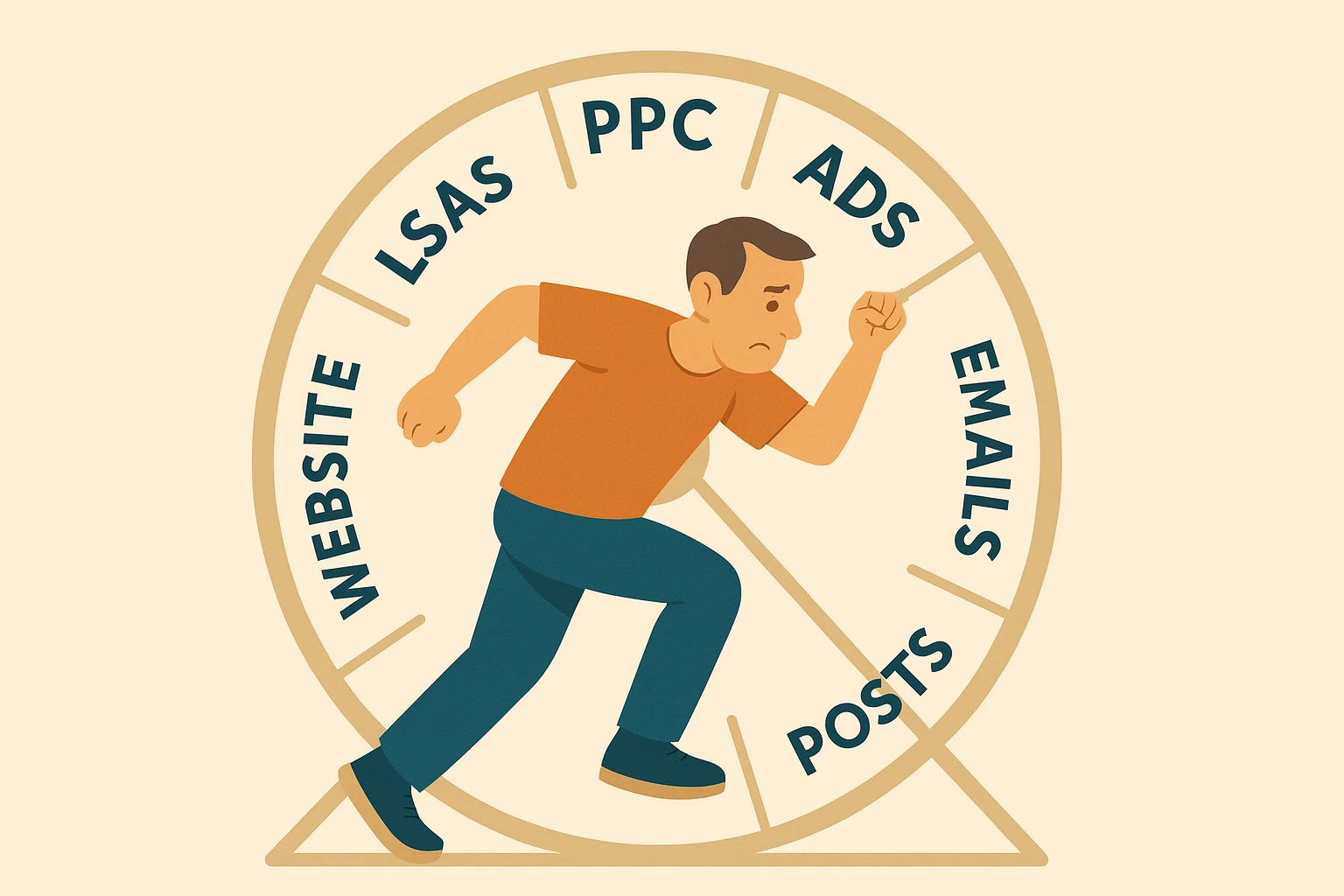
Many home service companies are stuck on the review treadmill. Every month they collect more. Every month their competitors do too.

The treadmill keeps moving. Nobody gets ahead.

Reviews are maintenance, not advancement.

Dropping below expectations hurts you. Rising above them requires brand-building work that reviews can’t accomplish.

The Premium Brand Audit

Assess honestly where you stand across the four dimensions.

Do you have documented processes customers can reference? Are you perceived as an expert or just competent? Are your touchpoints intentionally designed? Do you clearly know who your ideal customer is?

The gap between your answers and premium pricing is the work.

The Brand Building Commitment

You don’t need to be exceptional across all four dimensions to command higher prices. You need to be genuinely strong in one or two and competent in the others.

Start where you already have momentum. Codify it. Prove it. Build around it.

The alternative is continuing to collect reviews alongside your competitors and wondering why your prices stay flat while your ratings climb.

Five-star reviews prove you’re competent. A premium brand proves you’re worth more.

Beyond 5-Star Reviews: How to Command Premium Prices Read More »

Premium Service Playbook for HVAC, Plumbing, and Electrical Companies

How Top Contractors Charge More and Close More Jobs

Premium Service Playbook for HVAC, Plumbing, and Electrical Companies

The Premium Service Playbook for HVAC, Plumbing, and Electrical Companies

Here’s something that may defy everything you’ve been told about competing in the trades: the contractors charging the most in your market aren’t struggling to find customers. They’re turning work away.

Meanwhile, the companies racing to the bottom on price are drowning in low-margin jobs, dealing with price-shopping customers who haggle over every dollar, and wondering why they can’t get ahead despite working 60-hour weeks.

This isn’t a coincidence. It’s positioning.

This playbook is for established HVAC, plumbing, and electrical companies that:

  • Are tired of competing on price and attracting bargain hunters
  • Know they deliver better service, but aren’t paid accordingly
  • Want higher close rates without aggressive or pushy sales tactics
  • Are ready to lose cheap customers to make room for better ones

After 18 years working with home service companies, I’ve watched this pattern repeat across hundreds of markets. The difference between the company charging $89 for a service call and the one charging $129 rarely comes down to skill, equipment, or even service quality.

It comes down to how they’ve positioned themselves in the minds of their customers before the phone ever rings.

This premium service playbook shows how to make that shift, not through gimmicks or marketing tricks, but through strategic positioning that makes higher pricing easier to justify and easier to sell.

The Psychology of Premium: Why Higher Prices Actually Make Selling Easier

Let’s dismantle the biggest myth in home services marketing: that lower prices lead to more sales.

They don’t. Lower prices lead to more price-focused conversations with customers who’ve been trained to shop on cost. These customers call multiple companies after you leave. They negotiate your estimate down. They leave lukewarm reviews even when you do excellent work.

Premium pricing does something counterintuitive: it pre-qualifies your customers.

When someone calls a premium-positioned contractor, they’ve already accepted that they’re going to pay more. The mental hurdle is cleared. Your technician isn’t walking into a price negotiation, they’re walking into a problem-solving conversation with someone who values quality.

Key takeaway: Premium positioning removes the price objection before the technician arrives.

A plumbing company owner in Illinois we work with described it perfectly:

“We used to close maybe 40% of our calls. Now we close 65%, and our average ticket is $400 higher. We’re doing fewer jobs but making significantly more money, and my guys aren’t exhausted from running all over town for $150 tickets.”

The Foundation: Identifying Your Authentic Differentiators

You can’t charge premium prices for a commodity service. That’s the hard truth. If the only thing separating you from your competitors is the logo on your van, you’ll always compete on price.

The good news? Most contractors already have meaningful differentiators, they just don’t recognize them because they seem ordinary from the inside.

Here’s the test I use with every company I work with:

Can your competitors honestly make the same claim?

If yes, it’s not a differentiator. If no, you’ve got something worth building on.

Quality work” fails this test. Every contractor claims it. “24/7 emergency service” usually fails too.

But consider this:

An HVAC company in Colorado realized their real differentiator wasn’t their equipment, it was their diagnostic process. While competitors spent 10 minutes looking at a system before quoting a replacement, they spent 45 minutes running comprehensive tests.

The owner was an engineer who couldn’t stand guessing. He’d been doing this for years and never thought to market it.

Now their entire brand centers on “The 27-Point Precision Diagnostic.” Their close rate on system replacements increased by 23%—because customers trusted the recommendation.

Another plumbing company discovered their differentiator was operational: real-time technician tracking with arrival windows accurate to 15 minutes. What felt like basic efficiency internally was revolutionary to customers tired of “somewhere between 8 and 5.”

Look for differentiators in places your competitors overlook: hiring standards, training depth, diagnostic rigor, warranties, follow-up procedures, specializations, or even company history. These details are invisible to competitors… and valuable to customers.

Building the Premium Brand Architecture

Once you’ve identified your differentiators, you need a brand architecture that reinforces premium positioning at every touchpoint. This isn’t about a new logo. It’s about consistency.

Your pricing structure tells a story. Premium contractors don’t hide or apologize for pricing. They frame it with confidence and context.

“Service call: $129” becomes:

“Diagnostic visit including a 27-point inspection, written system assessment, and priority scheduling: $129.”

Same price. Completely different perception.

Your first impression is your frontline. Phone greetings, response time, confirmation messages, these micro-interactions either reinforce or undermine your positioning. A premium brand answered with a rushed “Hello?” creates instant dissonance.

Your technicians are your brand ambassadors. Premium positioning fails when marketing promises one experience and technicians deliver another. Successful companies invest in soft skills: explaining complex issues clearly, presenting options without pressure, and leaving a home cleaner than they found it.

Your follow-up cements the decision. The 48 hours after a service call determine whether customers feel confident or second-guess their choice. Premium companies use this window intentionally: check-in calls, satisfaction surveys, and relevant maintenance tips that transform transactions into relationships.

The Premium Sales Process: Consultative, Not Pushy

Many contractors sabotage premium positioning by pairing higher prices with aggressive sales tactics. It doesn’t work.

Premium sales is consultative. It’s rooted in diagnosis, education, and transparency.

Lead with diagnosis, not solutions. When technicians arrive already knowing what they’re going to sell, customers sense it. Premium companies diagnose first and recommend second, even when that means recommending a repair over a replacement.

Present options, not ultimatums. “You need a new system” shuts down trust. “Here are three approaches, each with different tradeoffs” invites partnership. Good-better-best works because it respects customer intelligence.

Explain the why. “Your compressor is failing” means nothing. Explaining how it affects comfort, efficiency, and long-term reliability creates understanding. Understanding builds trust. Trust closes sales.

Be willing to walk away. Premium companies don’t cave on price. They explain their value once more—and if needed, offer referrals. Ironically, that confidence often pulls customers back.

Marketing Alignment: Attracting the Right Customers

Premium positioning only works if your marketing attracts premium customers.

Stop leading with price. Promotions like “$49 Service Call” train your market to see you as a commodity and invite negotiation.

Premium contractors lead with outcomes and expertise:

  • The diagnostic that catches what others miss
  • Why 1,200 homeowners trust us with their comfort
  • Installations backed by a 10-year total confidence guarantee

Invest in expertise-driven content. Premium customers research before they buy. Helpful articles, videos, and explanations build credibility long before the call. When they reach out, they already believe you’re the expert.

Use social proof strategically. Star ratings matter, but stories matter more. Highlight testimonials that reinforce premium value: accurate diagnosis, clear explanations, thorough follow-up.

Own local expertise. Premium companies become the authority in their market, quoted in local media, trusted by partners, visible in the community. Authority makes premium pricing feel natural.

The Proof Architecture: Making Premium Tangible

Premium positioning requires proof.

Document everything. Inspection reports with photos. Written assessments. Equipment condition notes. This isn’t just protection, it’s evidence that you did what you promised.

Guarantee with confidence. Generic guarantees don’t differentiate. Specific guarantees do. “If your system fails within 48 hours of our repair, we’ll return and fix it free—and refund your service call.” That’s a guarantee customers remember.

Show your credentials. Certifications, training, insurance, manufacturer partnerships, feature them prominently. Premium companies don’t hide legitimacy in fine print.

Measure and share outcomes. First-call resolution rates. Customer satisfaction scores. Warranty claims. These metrics transform marketing claims into objective proof.

Common Mistakes That Kill Premium Positioning

Inconsistency destroys trust. You can’t position as premium and run discount blitzes on weekends. Mixed messages confuse the market.

One bad experience carries more weight. Premium expectations are higher. That means quality control is non-negotiable.

Confidence isn’t arrogance. Elevate your company without belittling competitors. Customers can feel the difference.

Premium doesn’t mean inaccessible. Slow response times don’t signal exclusivity, they signal disorganization. Premium customers expect responsiveness.

The Implementation Roadmap

Months 1–2: Foundation. Identify differentiators. Audit touchpoints. Train teams on premium service standards.

Months 3–4: Soft launch. Test new pricing with new customers. Refine sales conversations. Gather proof.

Months 5–6: Full rollout. Update marketing. Implement follow-up systems. Track performance.

Months 7–12: Optimization. Refine based on data. Strengthen proof. Address gaps.

The companies that succeed show patience. Losing price-sensitive customers isn’t a failure—it’s the strategy.

The Bottom Line

Premium positioning isn’t about being expensive for its own sake. It’s about delivering real value, charging appropriately for it, and attracting customers who recognize the difference.

You didn’t get into this trade to compete on price. You got into it because you’re good at what you do.

Premium positioning simply lets your market see what you’ve known all along.

The only question is whether you’re ready to stop competing on price, and start commanding it.

How Top Contractors Charge More and Close More Jobs Read More »

The psychology of service pricing

The Psychology of Premium Service Pricing

The psychology of service pricing

Why apologizing for your prices quietly destroys trust, and how confident contractors charge 20–40% more while closing faster

I watched a master plumber with thirty years of experience stumble over his own estimate last week.

He’d just diagnosed a complex issue that would have taken most technicians twice as long to identify. His solution was elegant. His price was fair.

And the moment he said the number, he flinched.

“I know that sounds like a lot, but…”

That single word—but—cost him the job.

Not because his price was too high. It wasn’t. He lost because the customer watched him apologize for his own expertise and thought:

If he doesn’t believe he’s worth it, why should I?


In this article, you’ll learn:

  • Why apologizing for your price creates distrust instead of reassurance
  • How confident contractors charge 20–40% more and close faster
  • The language patterns that quietly sabotage premium pricing
  • What to change immediately if you want to stop competing on price

The Apology Reflex (And Where It Comes From)

Most contractors don’t realize they’re apologizing for their prices.

It’s a learned reflex, shaped by years of lowball competitors, price shoppers, and the cultural idea that trades work should always be “affordable.” Over time, higher prices start to feel like something that needs to be justified rather than something that signals value.

Psychologically, this creates a negative price association. You begin to treat your price as a problem to overcome instead of a statement of confidence.

Here’s the uncomfortable truth: apologizing doesn’t make customers feel better about paying.

It makes them suspicious.

People rely heavily on confidence signals when evaluating services they can’t objectively measure. When a surgeon quotes a fee without hesitation, you assume the procedure requires that investment. When a contractor hedges, qualifies, or softens the number, customers assume the price is inflated—or negotiable.

The apology doesn’t lower resistance. It creates it.


The Certainty Premium

Behavioral economists use the term certainty premium to describe something powerful: people willingly pay more for outcomes they believe are guaranteed.

This is why companies with clear processes, decisive recommendations, and confident communication routinely charge 20–40% more than competitors who describe themselves as “flexible on price.”

Flexibility sounds customer-friendly. In practice, it signals uncertainty.

And uncertainty is expensive.

Consider the difference:

“I can probably get that done for around twelve hundred, give or take.”

Versus:

“This repair is $1,247. We’ll have it completed by Thursday, and it’s guaranteed for two years.”

Same repair. Same price. Completely different psychology.

The second version feels like a better deal—not because it’s cheaper, but because certainty itself has value.


Why Customers Don’t Trust “Fair” Prices

There’s a counterintuitive truth at the heart of premium pricing:

In service businesses, higher prices are often trusted more than lower ones.

Not always. Not without context. But when quality can’t be evaluated before purchase, price becomes a proxy for competence.

Customers can’t see inside their walls. They don’t know if a something really needs replacing. They can’t tell whether a repair will last ten years or fail in six months.

So they evaluate what they can see:

  • Your price
  • Your presentation
  • Your confidence

When you position yourself in the middle of the market and apologize for it, you create ambiguity. You’re not the budget option, but you’re not acting like the premium choice either.

Ambiguity feels risky.

The companies charging 40% more aren’t hiding their prices better. They’re owning them.


From Defensive Pricing to Offensive Pricing

Stopping the apology isn’t about charging more for the same work.

It’s about changing how you think about pricing altogether.

Defensive pricing starts with costs. You calculate inputs, add a margin, and prepare to justify the number.

You’re already anticipating objections before the customer speaks.

Offensive pricing starts with outcomes. You price the certainty, the solved problem, the peace of mind, and the guarantee.

A customer calling at 10 PM with a failed water heater doesn’t care about your overtime rate. They care about having hot water for their kid’s bath in the morning.

Pricing the outcome changes the entire conversation.

This isn’t manipulation. It’s accuracy.


The Language of Premium Positioning

Customers recognize apology language instantly, even if they can’t name it:

  • “only”
  • “just”
  • “around”
  • “roughly”
  • “I can probably”
  • “we might be able to”

Compare that with the language of confidence:

  • “This is”
  • “Your investment is”
  • “We guarantee”
  • “You’ll have”

The difference isn’t aggression. It’s clarity.

You’re not pressuring anyone. You’re stating reality without hedging. The price is what it is. The outcome is what it is. The decision belongs to the customer.

Removing ambiguity often increases close rates, even at higher prices, because you’ve made the decision easier.


Three Changes You Can Make This Week

  1. Remove hedging language from estimates.
    If you wouldn’t say “probably” about the repair itself, don’t say it about the price.
  2. Anchor outcomes before price.
    Lead with what’s being solved, how long it will take, and what’s guaranteed, then state the number.
  3. Audit where your pricing is competitor-based.
    If your prices are set by what others charge instead of what certainty you provide, confidence will always feel forced.

Building Confidence That’s Actually Warranted

None of this works if you’re faking it.

Customers can smell performative confidence, and it backfires.

The goal isn’t to act confident about prices you don’t believe in. The goal is to build a business where your prices genuinely reflect your value.

That means understanding what your expertise saves customers in misdiagnosis, callbacks, downtime, and failed repairs. It means recognizing that twenty years of experience has real market value—even if you’ve never priced it that way before.

Most contractors don’t do this math. They price based on competitors, gut feel, or what feels comfortable.

Then they apologize.

When you understand your actual value, not just your costs, confidence stops being performance.

It becomes accuracy.


What Happens When You Stop Apologizing

The first time you quote a premium price without hedging, some customers will balk.

That’s fine.

They were likely price shoppers who would have been unprofitable anyway.

Other customers will simply say yes. No negotiation. No pushback. Just acceptance.

Those are the customers you want.

They trust your expertise, refer others like themselves, and make your business easier, and more profitable, to run.

Higher margins fund better training, better systems, and better customer experience. That investment justifies higher prices, which attracts better customers.

And eventually, you stop spending your career apologizing for your own expertise.

There are few things more liberating than that.


Where to Go From Here

If you’re losing jobs you should be winning, your pricing probably isn’t the real problem.

Your positioning is.

At Service Labs Group, we work with established HVAC, plumbing, and electrical companies to identify where confidence breaks down, and rebuild pricing, messaging, and marketing systems that support premium positioning.

If you’re ready to stop competing on price and start closing better jobs at higher margins, that’s the conversation we should be having.

The Psychology of Premium Service Pricing Read More »

Home Services Unique Value

How to Identify Your Company’s Unique Value

Identify Your Company’s Unique Value

When you say “quality work and great customer service,” you’re not reassuring customers, you’re telling them you’re interchangeable.

And interchangeable companies don’t set prices. The market does.

Every HVAC company claims quality work. Every plumber promises reliability. Every electrician swears they’re the most professional. These claims have become so universal they’ve lost all meaning. They’re table stakes, not differentiators.

The result? You compete on price. And competing on price is a race where everybody loses, except the customer who gets to squeeze your margins thinner and thinner.

Here’s what I’ve learned working with home service companies for nearly two decades: Every company has something genuinely unique about how they operate. The problem isn’t that differentiation doesn’t exist. The problem is that most owners are too close to their own business to see it.

This article is for owners of established HVAC, plumbing, and electrical companies who are tired of winning jobs and losing margins, and know there has to be a better way to compete than being “a little nicer” or “a little cheaper.”

Why Generic Claims Commoditize Your Business

Before we dig into finding your real differentiator, let’s make the problem crystal clear: generic marketing claims don’t just fail to help you, they actively hurt you.

When a homeowner compares three companies and all three claim “quality work, fair prices, and professional technicians,” they have no meaningful way to distinguish between options. So they default to something else:

  • The cheapest quote
  • The fastest callback
  • A vague recommendation (“My neighbor used them once”)
  • Or the company with the best availability

Your marketing has essentially told them: “We’re interchangeable, so choose based on something other than our actual capabilities.”

That’s the opposite of what marketing should accomplish. Clear differentiation doesn’t just justify higher prices, it filters out bad-fit leads before the phone ever rings.

The Differentiation Discovery Framework

This isn’t a quick branding exercise. It requires honest reflection and, ideally, input from people who know your business—employees, long-term customers, even vendors.

The goal is to uncover what’s genuinely different about your operation, not to invent something that sounds good.

How to Run This Exercise (So You Actually Get Answers)

  • Block 60 minutes (no phone, no email)
  • Answer each question in writing (not in your head)
  • Highlight anything measurable (numbers, standards, guarantees, response times, completion rates)
  • Circle anything customers mention unprompted (“You guys always…”, “Nobody else…”, “I called because…”)

If you can’t explain your differentiator in one sentence, it’s not a differentiator yet, it’s a rough idea that needs sharpening.

Question 1: What do you do that you assumed everyone does, but they don’t?

What this reveals: Hidden operational advantages you’ve stopped noticing.

This is usually where the gold is buried.

I worked with a plumbing company owner who mentioned, almost as an afterthought, that his techs always lay down drop cloths and wear booties, and they take “before and after” photos of every job site.

“Doesn’t everyone do that?” he asked.

No. Not even close. Most companies don’t have that discipline. But because he’d done it for years, he stopped seeing it as remarkable.

Think about your processes, your hiring standards, your follow-up procedures, your warranty policies. What feels “normal” to you that would surprise customers if they knew how different it was from competitors?

Ask your employees: “What do we do here that you’ve never seen at other companies?” Their answers might shock you.

Question 2: What specific problem do you solve better than anyone in your market?

What this reveals: Where you can own a niche and avoid price competition.

Notice the word specific. Not “we solve all problems well.” That’s meaningless.

Maybe you’ve become the go-to company for complex commercial retrofits because you invested in specialized training. Maybe you’ve figured out how to handle historic homes without damaging original materials. Maybe you’ve developed a system for completing whole-house rewires in half the typical time.

The key is specificity. “We’re great at electrical work” is nothing. But:

“We specialize in panel upgrades for homes built before 1970, and we’ve developed a process that minimizes drywall repair.”

That’s a real differentiator, especially if it reduces mess, disruption, and unexpected costs.

Ask yourself:

  • What jobs do you take that competitors turn down?
  • What problems do you see other companies repeatedly botch?
  • What calls make you think, “They came to the right place”?

Question 3: What would your best customers say if asked why they keep calling you?

What this reveals: The true reason you win (which is often different than what you think).

Not what you hope they’d say. What they actually say.

This requires real conversations, not assumptions. Call five of your best repeat customers, the ones who’ve used you multiple times and referred others, and ask them directly:

“I’m trying to understand what makes us different from other companies. Why do you keep calling us instead of shopping around?”

Listen carefully. They’ll tell you things you’ve never considered. And because they’ve likely used competitors, they can articulate differences you can’t see from the inside.

One owner I worked with was convinced his differentiator was technical expertise. But when he called customers, they kept mentioning something else entirely:

“Your office staff actually calls back when they say they will.”

That became a central piece of positioning: same-day callbacks, guaranteed. It didn’t just sound good, it eliminated a real frustration customers were used to tolerating.

Question 4: What have you invested in that competitors haven’t?

What this reveals: Advantages you can prove, if you translate them into customer outcomes.

Investment creates differentiation. But only if you translate that investment into customer benefit.

Did you spend money on advanced diagnostic equipment? That’s not the differentiator. The ability to pinpoint problems faster, with less guesswork and fewer return visits, that’s what customers care about.

Did you invest in ongoing training? Nobody cares about your training budget. But they do care that your techs are certified to work on the specific brand of equipment in their home, reducing the risk of warranty-voiding mistakes.

Did you invest in better trucks and inventory management? “Nice trucks” means nothing. But:

“We stock 300 common parts on every truck, so 90% of repairs are completed on the first visit.”

That solves a real customer frustration and shortens the sales cycle because it’s easy to understand.

Action: List your top 5 investments from the last 3 years. For each one, write the customer outcome in plain language: faster, cleaner, fewer trips, less risk, better options, more certainty.

Question 5: What do you refuse to do that competitors commonly do?

What this reveals: Values and standards the right customers will pay more for.

Sometimes what you won’t do is as powerful as what you will do.

Do you refuse to hire techs who haven’t passed a thorough background check, even though it makes hiring slower? Do you refuse to quote repairs without a full system inspection, even though it means some customers go elsewhere? Do you refuse to take on certain types of work because you’ve seen it done poorly too many times?

These “refusals” often represent genuine values that the right customers will pay more for. The customer who values a thorough background check will pay a premium for the peace of mind. The customer who’s been burned by a quick-fix that failed will appreciate a company that insists on doing it right.

Your constraints and standards are differentiators, if you communicate them as customer benefits rather than operational details.

Testing Your Differentiator (Before You Build Marketing Around It)

Once you’ve worked through these questions, you should have a few candidates for genuine differentiation. Before you plaster them across your website, apply these three tests:

The “Only We” Test: Can you honestly say “We’re the only company in this market that _______”? If three competitors could make the same claim, it’s not a differentiator.

The “So What” Test: Does it matter to customers? Being the only company with purple trucks is unique but irrelevant. Being the only company that offers Saturday service with no premium pricing might matter enormously to dual-income families.

The “Prove It” Test: Can you demonstrate the difference with evidence: testimonials, data, guarantees, visible processes, photos, a checklist, a documented standard? A differentiator you can’t prove is just another empty claim.

From Discovery to Positioning

Finding your differentiator is only the first step. The harder work is weaving it into everything: your website, truck wraps, phone scripts, follow-up emails, proposal templates, and how your team talks about what you do.

But that work becomes dramatically easier once you know what makes you genuinely different. You’re no longer grasping for marketing language. You’re simply telling the truth about your business in a way that attracts customers who value what you offer.

And those customers don’t shop on price. They’re looking for a company that reduces risk, solves a specific problem, communicates clearly, and delivers a predictable outcome.

That’s how you command premium pricing: not by claiming you’re better, but by proving you operate differently in ways customers actually care about.

Optional Next Step (If You Want a Second Set of Eyes)

If you run this framework and end up with a handful of “maybe” differentiators, here’s a simple way to pressure-test them:

  • Write each differentiator as a one-sentence claim.
  • Write the customer benefit in one sentence.
  • List how you can prove it (data, guarantee, photos, process, testimonials).

If you want help tightening that into a clear positioning statement (the kind that attracts premium customers and filters out price shoppers), I’m happy to take a look and tell you what’s strongest, what’s weak, and what’s hard to defend.

How to Identify Your Company’s Unique Value Read More »

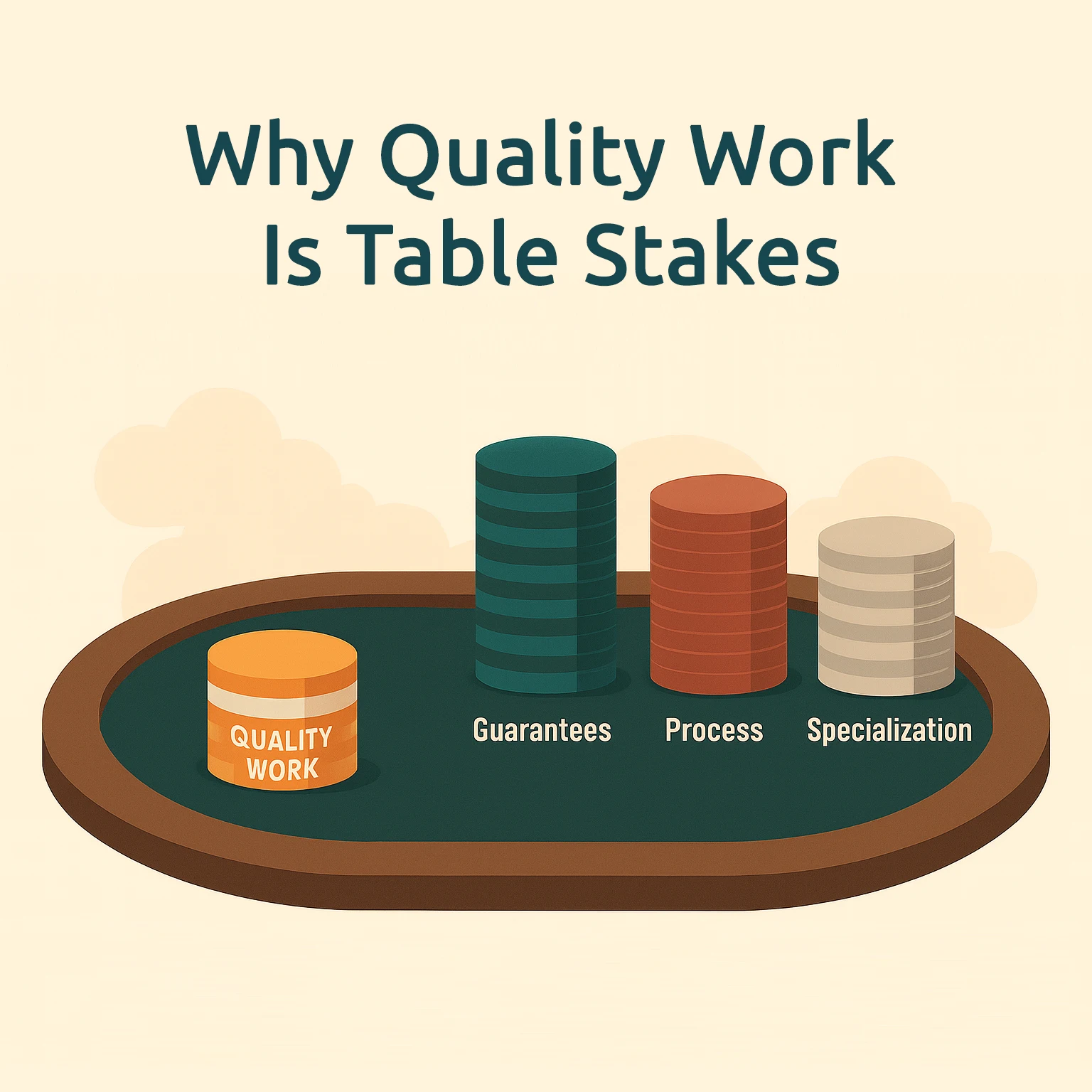
Why Quality Work Is Table Stakes

Why “Quality Work” Isn’t a Differentiator for Home Service Companies

Quality Work Is Table Stakes

If you run an established HVAC, plumbing, or electrical company and still feel pressure to compete on price, this is for you.

Pull up the websites of five home service companies in your market. I’ll wait.

Now tell me how many of them mention “quality work,” “exceptional service,” or “customer satisfaction.” My guess? All five. Maybe they threw in “family-owned” and “serving the community since [year]” for good measure.

Here’s the uncomfortable truth: when everyone says the same thing, nobody is saying anything at all.

The Quality Trap

I’ve talked to hundreds of home service business owners over the past 18 years. Nearly all of them genuinely believe their work quality sets them apart. And honestly? They’re probably right.

They likely do better work than at least some of their competitors.

But that’s not the problem.

The problem is that quality work is table stakes, not a differentiator. When a homeowner calls for a new HVAC system, a plumbing repair, or an electrical upgrade, they aren’t hoping you’ll do quality work. They’re assuming it.

The alternative, shoddy work, isn’t even on the table in their mind.

Claiming quality work as your differentiator is like a restaurant advertising, “We serve food that won’t make you sick.” Technically true. Completely meaningless.

Why This Happens in Home Services Marketing

Business owners default to “quality work” messaging for a few reasons.

First, you’re too close to your own business. You see the callbacks your competitors generate. You know the shortcuts other companies take. You’ve fixed enough botched jobs to understand what good work actually looks like. That knowledge is a competitive advantage, just not in the way you’re communicating it.

Second, it’s safe. Nobody is going to argue with “quality work.” It’s vague enough to be true and broad enough to apply to everything. That safety is exactly what makes it useless as a positioning strategy.

Third, referrals have masked the problem. When most of your business comes from repeat customers and word of mouth, positioning takes care of itself. Those customers already know your value. The moment you need to attract strangers—through your website, Google Ads, or local SEO—generic messaging collapses.

The Differentiation Test

Real differentiation passes a simple test:

Could your competitor say the exact same thing and have it be equally true?

“We do quality work.” Could a competitor say that? Of course.

“We’re family-owned and operated.” Could a competitor say that? Probably.

“We’ve been in business for 20 years.” Could a competitor say that? Many could.

These aren’t differentiators. They’re expectations—the minimum requirements to even be considered.

Now consider these statements:

“We guarantee same-day service for any call received before noon, or your diagnostic fee is waived.”
This removes scheduling uncertainty and shifts risk away from the homeowner.

“Every technician completes 80 hours of annual training—four times the industry average.”
This directly addresses the fear of an inexperienced tech being sent to their home.

“We show you the problem on video before we quote the repair. No trust required.”
This eliminates skepticism by replacing belief with evidence.

Could competitors say these things? Only if they actually do them. That’s differentiation.

What Actually Differentiates a Home Service Company

True differentiation comes from specificity. It comes from making choices your competitors haven’t made, or won’t make.

Process Differentiation

How you deliver the service matters as much as the service itself. Homeowners remember the experience long after the repair is finished.

Do you have a documented process that creates a noticeably different experience? That might include how you protect the home, how often you communicate during a project, or how you handle follow-up after the job.

The process itself can be proprietary. Name it. Own it. “The SafeHome Installation Process” sounds specific and intentional, even if the individual steps feel obvious to you. Specificity creates perceived value.

Guarantee Differentiation

Anyone can offer a guarantee. Very few make guarantees specific and meaningful enough to influence buying decisions.

“100% satisfaction guaranteed” means nothing because there’s no definition of satisfaction and no clear remedy.

“If your new system doesn’t reduce your energy bill by at least 20% in the first year, we’ll refund the difference” means something. It’s measurable. It implies confidence. It shifts risk away from the homeowner.

Strong guarantees feel uncomfortable. That’s intentional. If you’re not willing to stand behind a specific outcome, customers have no reason to believe you’ll deliver it.

Specialization Differentiation

Generalists compete on price. Specialists command premiums.

You don’t need to turn away most work to specialize in your messaging. But “We specialize in historic home electrical upgrades” attracts a very different customer than “Full-service electrical contractor.”

The first signals expertise. The second signals availability.

Specialization can be based on property type, service type, or customer type. The key is focus. Focus creates trust, and trust reduces price resistance.

Transparency Differentiation

The home service industry has a trust problem. Homeowners expect to be sold to.

Radical transparency—showing customers exactly what you see, explaining why something needs repair, and educating before asking for a decision—flips that expectation on its head.

Video inspections, detailed reports, and side-by-side photos turn skepticism into confidence. You’re no longer asking the customer to trust you. You’re letting them verify the problem themselves.

The Premium Positioning Connection

Differentiation isn’t about sounding smarter than your competitors. It’s about escaping commodity pricing.

When you’re undifferentiated, you’re interchangeable. Interchangeable companies compete on price.

When you’re differentiated, comparison shopping becomes harder. You’re no longer one of five identical options. You’re offering a distinct value proposition.

We’ve seen home service companies raise prices by 20–40% while maintaining, while improving close rates once their differentiation is clearly articulated. Premium positioning doesn’t repel good customers. It attracts the right ones.

The Hard Part

Finding your real differentiator requires honesty.

It may mean investing in training competitors avoid. It may mean offering guarantees that feel risky. It may mean saying no to work that doesn’t fit your specialty.

Most companies won’t do this. They’ll keep saying “quality work” and wonder why margins stay tight.

That’s good news for you. Their reluctance to differentiate is your opportunity.

Your Next Step

Audit your current messaging, your website, proposals, truck wraps, and sales conversations.

For every claim you make, ask: Could a competitor say this and have it be equally true?

If the answer is yes, it’s not a differentiator.

Then ask the harder question: What do we actually do differently? Not better. Differently.

If you want an outside perspective, this is exactly what we help established home service companies uncover and articulate. A clear differentiation strategy doesn’t just improve marketing, it makes sales easier and price objections rarer.

Quality work matters. It’s just not enough anymore.

Why “Quality Work” Isn’t a Differentiator for Home Service Companies Read More »

Marketing Tactics vs Strategy

Why Most Home Service Marketing Agencies Get It Wrong

Marketing Tactics TrapYou’ve hired multiple marketing agencies over the years. Each one promised “more leads,” “better SEO,” and “game-changing campaigns.” Yet you’re still competing on price, still juggling new tactics every quarter, and still wondering why your marketing budget feels like it disappears without producing meaningful growth.
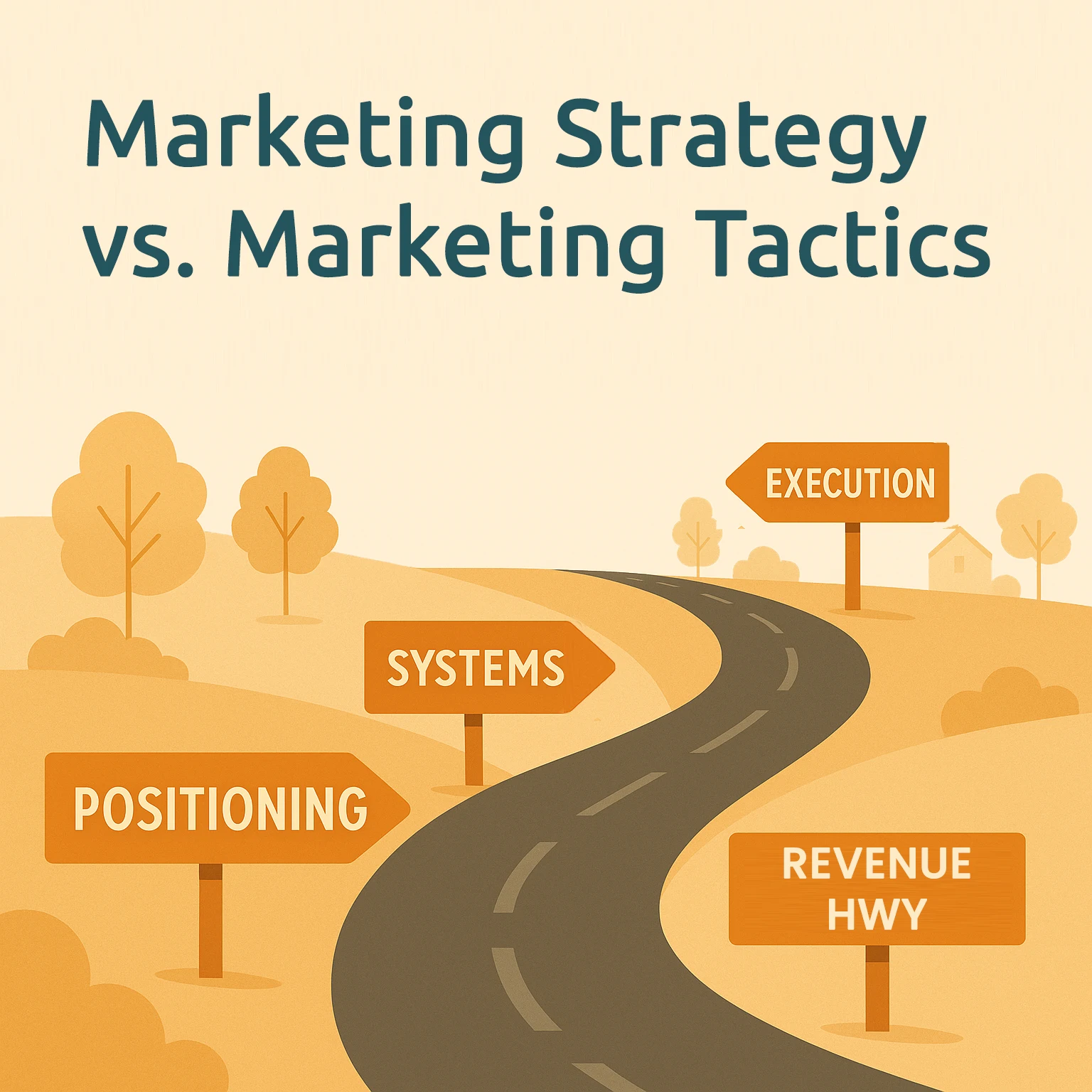
Sound familiar?

After 18 years in the trades industry and conversations with hundreds of frustrated contractors, I’ve learned this truth: most agencies keep home service companies trapped in the wrong game entirely.

The Execution Trap That’s Killing Your Growth

Your agency probably sounds like this: “We’ll get you 50 more leads this month! We’ll post three times a week! We’ll redesign your website with stronger CTAs!

They’re not wrong about the tactics. They’re just answering the wrong question.

This is the Execution Trap—the cycle where busy activity is mistaken for meaningful progress. Agencies keep you so focused on campaigns, impressions, and lead counts that you never stop to ask the question that actually moves the needle:

Are we positioned to win? Or just positioned to chase?”

Here’s what the Execution Trap looks like in the real world:

  • Agency sells a new channel or campaign
  • You approve more budget
  • Leads go up (temporarily), close rates don’t
  • You still can’t raise prices or escape price competition

Busy, but not better. Motion, but not progress.

The Three Pillars Most Agencies Ignore

While agencies obsess over clicks, impressions, and monthly lead reports, they miss the strategic fundamentals that actually drive profitable, sustainable growth.

1. Market Position Before Market Presence

Your agency wants to make you visible. But visibility without positioning is just expensive noise. If you’re not clearly differentiated—meaning prospects instantly know why you’re worth more—then the more visible you become, the more you blend in.

Weak positioning: “Fast, friendly, and fair pricing.”
Strong positioning: “The areas premium boiler and hydronic heating specialists for older homes.”

I’ve seen contractors raise prices by 20–40% while improving their close rates. They didn’t do it with more leads—they did it through stronger positioning. When you own a specific place in the customer’s mind, price becomes a secondary decision.

Ask yourself: If a premium customer compared you to three competitors for 30 seconds, could they instantly identify why you cost more?

2. Systems Before Campaigns

Quick question: What percentage of your marketing budget goes to management fees versus actual media spend? If you don’t know, that’s by design.

The industry standard is 15–25% management fees and 75–85% media spend. But without proper systems, you’re flying blind. Before you run another campaign, you need:

  • A clear separation of management fees vs ad spend
  • Campaign-level call tracking tied to revenue
  • Conversion tracking that includes booked jobs, not just leads
  • Customer lifetime value and revenue-per-channel calculations

If your agency can’t show revenue per channel in under 10 minutes, they’re guessing.

3. Revenue Optimization Over Lead Generation

Lead generation companies profit when you stay addicted to new leads. But your existing customer database is worth 5–10x more than cold traffic—and it’s the fastest path to profitable growth.

Integrated multichannel strategies outperform single-channel campaigns by 63%. Yet many agencies push new channels instead of optimizing what’s already working.

Examples of revenue optimization your agency probably isn’t doing:

Your biggest opportunity isn’t more leads, it’s more value per customer.

The 7–10% Rule Nobody Talks About

Top-performing home service companies invest 7–10% of gross revenue into marketing. But here’s the part agencies leave out: the allocation determines your results—not the amount.

Benchmark allocation looks like:

  • 40–60% digital channels (Google Ads, LSAs, SEO)
  • 15–25% traditional channels (direct mail, outdoor, door hangers)
  • 10–20% partnerships and local sponsorships

For a $4M company, that’s a $280K–$400K investment. Misallocating even 20% is a $56K–$80K mistake, and most agencies misallocate far more than that.

Agencies push what they know how to execute. Not what’s strategically best for your market.

Why Phone Calls Still Win (And Why Agencies Avoid Them)

Digital agencies love form fills and chats because they’re easy to track. But phone calls are still the highest-converting lead source in home services. They’re urgent, high-intent, and ready to buy.

Yet many agencies either ignore call tracking or bolt it on as an afterthought, because phone calls reveal the real quality of their leads.

The Strategic Shift That Changes Everything

Stop asking, “How can we get more leads?” and start asking:

“How can we command premium prices while improving our close rate?”

Stop measuring activity. Start measuring:

  • Revenue per customer
  • Close rates at premium pricing
  • Customer lifetime value
  • Market share inside your premium segment

Stop hiring vendors who execute tactics. Start working with strategic partners who help build the marketing foundation your company needs to scale.

The Uncomfortable Truth About Your Current Agency

Your agency isn’t necessarily incompetent, they’re just incentivized to keep you tactical. If you suddenly started focusing on positioning, pricing power, and systems, you might need less of what they sell.

And that’s not good for their retention rate.

A Quick Example: How Strategy Beats Tactics

A $6M HVAC company we worked with was stuck at 12% net profit despite strong lead volume. They’d tried several different agencies in four years.

Once we repositioned them as the area’s premium heat-pump and energy-efficient system specialists, and rebuilt their budget allocation, they:

  • Raised prices 25%
  • Improved close rates
  • Reduced marketing channels from 7 to 4
  • Grew revenue by $1.8M without increasing lead volume

Not because of more leads. Because of better strategy.

How to Audit Your Agency in 10 Minutes

Ask your agency these questions:

  • What makes us worthy of premium pricing, and how does our marketing reflect that?
  • Can you show media spend vs management fees for every channel?
  • Do you track booked jobs and revenue by campaign?
  • How do you optimize our existing customer base?
  • What systems have you built to improve close rates and pricing power?
  • What’s our actual revenue per channel, not just leads?

If they struggle with these, you don’t have a strategic partner, you have a vendor.

What Actually Works

The path forward is simple, but it requires a different way of thinking:

  1. Audit your marketing foundation. Positioning, pricing, segmentation, budget allocation, tracking systems.
  2. Identify what truly differentiates you. Not what you like about your business, what premium customers value enough to pay more for.
  3. Build your brand around that difference. This is about perception and category ownership, not logos.
  4. Target premium buyers intentionally. The companies who thrive are the ones who stop trying to serve everyone.
  5. Measure what matters. Revenue per customer, close rates at premium prices, lifetime value, and share of wallet.

The Choice Is Yours

You can keep chasing leads, switching agencies, lowering prices, and hoping next quarter feels better. That’s the Execution Trap.

Or you can make the strategic shift that top HVAC, plumbing, and electrical companies use to dominate their markets:

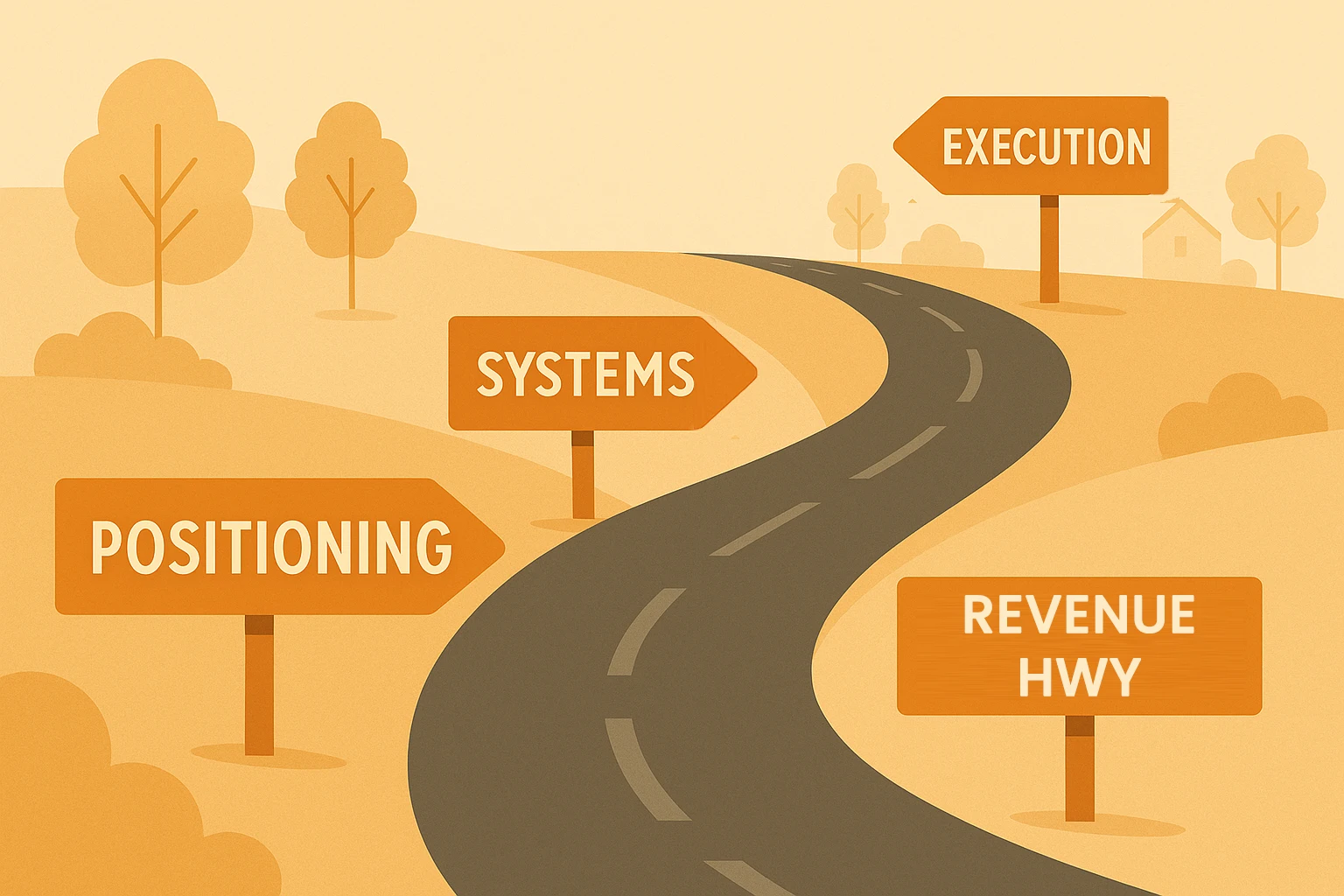
Positioning over visibility.
Systems over campaigns.
Revenue optimization over lead generation.
Strategy over tactics.

Your next marketing decision will either perpetuate the cycle, or break it.

Ready to Break the Execution Trap?

If you’re a home service company tired of competing on price and ready to build a marketing system that actually scales, the next step is simple: audit your foundation.

Book a Strategy Call

Why Most Home Service Marketing Agencies Get It Wrong Read More »

Marketing Strategy vs. Marketing Tactics

Marketing Strategy vs. Marketing Tactics

From Tactics To Strategy

Why Most Home Service Companies Are Stuck in Execution Mode

What separates the HVAC or plumbing company doing $5 million a year from the one doing $50 million in the same market? Here’s a hint:

It’s not the number of Google Ads they run. It’s not their posting schedule. And it’s definitely not the shiny new marketing automation tool they bought last month.

The real difference is simple: one company has a strategy. The other has tactics.

In this guide, we’ll break down why so many home service companies stay stuck in execution mode, and how a strategic marketing foundation drives consistent, predictable, profitable growth.

1. The Execution Trap That Keeps Companies Stuck

Walk into any home service company’s marketing meeting and you’ll hear versions of the same conversation:

“We need more leads.”
“Can we increase our Google Ads budget?”
“What about LSA?”
“Should we try direct mail?”

This is the sound of a company stuck in execution mode, running from one tactic to the next without ever clarifying the bigger picture.

After 18 years in marketing for the trades, I see this constantly: companies spending $30K–$50K per month with no target customer profile, no pricing strategy, no positioning, and no measurable system for what actually drives profitable revenue.

They’re not running a marketing operation.
They’re running an expensive experiment.

2. Strategy vs. Tactics: The Million-Dollar Difference

Here’s a simple, real-world comparison:

Tactic: “We’re sending 10,000 direct mail pieces this month.”

Strategy: “We’re positioning ourselves as the premium provider for homeowners 55+ in the northwest suburbs; people who value reliability over price. Direct mail is our lead-in channel because this audience responds 3x better to physical mail than digital ads.”

See the difference? Tactics are what you do. Strategy is why you do it, who it’s for, and how it fits into your broader revenue architecture.

Without strategy, tactics become noise… expensive, time-consuming noise.

3. The Three Pillars of Strategic Marketing (That Most Companies Ignore)

1. Market Position Before Market Presence

Before you spend a dollar on advertising, answer:

  • Who exactly is our ideal customer? (Not “homeowners.”)
  • What problem do we solve better than anyone else?
  • Why should customers pay our premium price?

If you can’t answer these clearly, your marketing will default to price competition,  the death spiral of home services.

2. Systems Before Campaigns

A campaign delivers leads for a month. A system delivers revenue for years.

Strategic companies build:

Tactical companies chase the next “silver bullet.” Strategic companies build engines.

3. Metrics That Actually Matter

Which matters more?

A) 500 leads
B) $47 cost per acquisition, 2.3x return on ad spend, and 67% of revenue from existing customers

If you chose A, your mindset is tactical.

Lead count doesn’t matter. Profitability does.

4. Why Lead Generation Vendors Keep You Tactical

It’s not that vendors are bad. They just get paid to execute tactics, not design strategy.

  • PPC agencies want to run your Google Ads
  • Social companies want to post on Facebook
  • Direct mail houses want to print postcards

No one is asking: “Does any of this align with your positioning, pricing goals, and target customer?”

This is why companies end up with five vendors, mixed messages, and marketing costs that balloon to 12–15% of revenue.

Strategy-first companies stay in the optimal 7–10% range because their dollars work harder.

5. The Strategic Shift: From Vendor Collection to Revenue Architecture

Imagine your marketing engine looking like this:

  • Budget allocation is intentional—40–60% digital, 15–25% traditional, 10–20% partnerships based on documented performance.
  • Your premium positioning supports 20–40% higher prices while improving close rates.
  • Your channels reinforce each other—trucks, mailers, reviews, ads, and sales scripts all say the same thing.
  • You measure profitability, not lead count.

This is not fantasy. This is what happens when you move from tactical execution to strategic revenue architecture.

6. The First Step Out of Execution Mode

If you recognize your company in this article, here’s your starting point:

Pause all new marketing initiatives for two weeks.

Instead, answer these five questions with real data:

  1. Who are our most profitable customers?
  2. What’s our true cost per acquisition across all channels?
  3. What percentage of revenue comes from existing customers?
  4. What’s our average customer lifetime value?
  5. Why do customers choose us over cheaper options?

If you don’t know these, you’re not ready for more tactics. You need strategy.

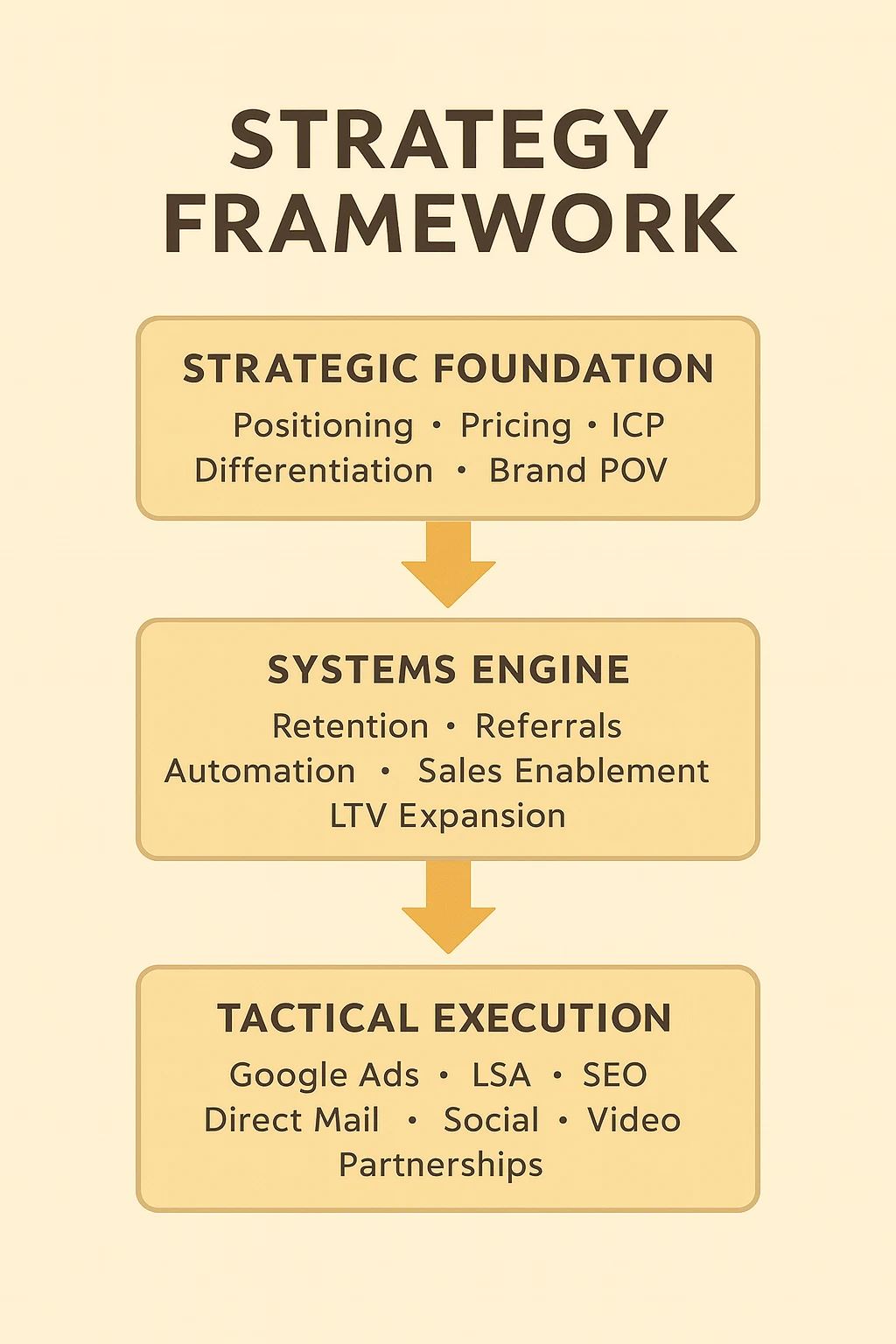
7. The Strategy-First Model

Strategy Framework
This is the model the $50M companies follow—intentionally or not.

Strategy drives systems. Systems drive tactics. Tactics execute the strategy.

Most companies skip the top two layers and wonder why growth stalls.

8. Ready to Build a Strategy That Scales?

Most HVAC, plumbing, and electrical companies will spend the next decade jumping from tactic to tactic, hoping something finally “works.”

A select few will step back, build a strategic foundation, and dominate their markets with predictable, profitable growth.

If you’re ready to stop competing on price and start commanding it, let’s talk.

Service Labs Group works exclusively with established home service companies ($2M–$10M) ready to build a premium, strategy-first marketing engine.

→ Book a Strategy Audit Call

→ Explore the Marketing Budget (7–10%) Framework

→ Learn How Premium Positioning Increases Prices 20–40%

Your competitors are playing checkers.
It’s time to start playing chess.

Marketing Strategy vs. Marketing Tactics Read More »

Premium Marketing Strategy

How to Position Your Company as the Premium Choice

Premium Marketing Strategy

Premium Service Marketing Strategy

In competitive markets, being “affordable” isn’t enough. The companies that thrive are the ones that position themselves as the premium choice, winning higher-margin jobs without competing on price.

Here’s a scenario that plays out every day: your sales team presents a proposal. The prospect says, “Your price is higher than the other quotes I got.” Your rep scrambles to justify the difference, talks about quality and experience, maybe offers a discount. The deal either drags on or goes to the cheaper competitor.

Now imagine this instead: the prospect already knows you’re the premium option before they even call. They expect to pay more. When they hear your price, they nod and ask, “What’s the timeline to get started?” The difference isn’t what you say during the sales conversation, it’s what you’ve already built before it begins.

This is the power of premium positioning. It’s not marketing fluff; it’s a strategic framework that makes selling easier from first contact to final signature.

Why Premium Positioning Helps You Sell More (and Faster)

Many business owners fear that positioning themselves as premium will shrink their market. They worry about “pricing themselves out.” The opposite is true when you do it right.

Price objections decrease. When prospects already see you as the premium option, they’re mentally prepared for higher pricing. The conversation shifts from “why so expensive?” to “is this the right solution for me?”

Sales cycles shorten. Budget shoppers self-select out early. Qualified buyers move faster. Studies show companies with clear premium positioning close deals up to 50% faster than competitors without it.

Conversion rates improve. Clarity beats volume. When your message is focused and specific, the right customers resonate and convert at higher rates than when you try to appeal to everyone.

Your sales team gains confidence. A clear, proven value story replaces price apologies. Your team can own the conversation rather than defend it.

3 Steps to Build a Premium Brand That Justifies Higher Prices

1. Identify Your Differentiating Value

“We provide quality service” isn’t differentiation. Everyone says that. Your differentiating value must be:

  • Specific: Instead of “fast service,” say “guaranteed same-day response with a two-hour arrival window.”
  • Provable: Back up claims with data, certifications, warranties, or guarantees.
  • Valuable to your target customer: Differentiate on what matters to them, not to you. A homeowner might care more about warranty length or communication than the origin of your parts.
Pro Tip: Ask, “What do we do that competitors can’t or won’t?” The answer often reveals your real edge.

2. Build Your Brand Around That Difference

Once you know what makes you different, every marketing touchpoint should reinforce it. This is where brand marketing becomes a sales tool.

  • Your website should show, not tell. Use before-and-after photos, process visuals, and guarantees that support your positioning.
  • Your Google Business Profile reviews should highlight specifics (“They used thermal imaging to find a leak other plumbers missed”).
  • Your sales materials should make price comparison irrelevant by proving why your process or results are unique.

Even your hold music, email signature, and proposal templates should align with your premium brand. Every detail builds the perception that “these people are different.”

3. Target and Message to Premium Buyers

Not everyone is your customer. Premium positioning means focusing on the right ones.

  • Geographic targeting: Focus ad spend on neighborhoods where premium buyers live. A $5,000 HVAC replacement means different things in different zip codes.
  • Message matching: Use ad copy that pre-qualifies. Instead of “HVAC repair, call now,” say “Premium HVAC solutions for homeowners who value comfort and reliability.”
  • Expert content: Premium buyers research before buying. Publish in-depth articles, case studies, and FAQs that show expertise and justify your value.

How to Respond to Price Objections with Confidence

Even with great positioning, prospects may question price. The conversation changes depending on your positioning.

Before:
“Your price is too high.”
“We use quality materials and experienced technicians…”
“The other guy said the same thing and he’s $2,000 less.”

After:
“Your price is higher than I expected.”
“That’s right. We’re typically 20–30% higher than basic providers because we include [specific differentiator]. The question isn’t whether we’re cheapest, it’s whether you want [outcome your difference provides]. If price is the top concern, we can recommend other good companies who may be a better fit.”

This approach reinforces your positioning rather than defending it. It gives the prospect permission to choose differently, which often increases respect and conversion.

Real-World Example: How One HVAC Company Used Positioning to Increase Close Rates

Company A markets itself as “honest, reliable, affordable.” They compete on price, offer frequent discounts, and emphasize longevity. Their average job value is $6,500, and they close about 40% of estimates.

Company B brands itself as “The Indoor Air Quality Specialists.” Every message focuses on health, comfort, and advanced diagnostics. They show thermal imaging reports, air quality test results, and explain their assessment process. Their average job is $8,500, and they close 58% of estimates.

Company B isn’t necessarily better at HVAC installation. They’re positioned better. They’ve built a story that matters to health-conscious homeowners, and their sales team confidently reinforces it.

Step-by-Step Premium Positioning Plan (12-Week Guide)

Weeks 1–2: Define Your Differentiation

  • Survey your best customers; why did they choose you?
  • Interview your sales team; what makes deals easy or hard?
  • Audit competitors; what do they all claim? Say something different.
  • List 3–5 specific, provable, valuable differentiators.

Weeks 3–4: Align Your Messaging

  • Rewrite your website homepage around your key differentiator.
  • Update your Google Business Profile description.
  • Create ad copy that pre-qualifies premium buyers.
  • Develop sales scripts that confidently explain your value.

Weeks 5–8: Build Supporting Evidence

  • Gather case studies and testimonials mentioning your differentiator.
  • Create videos or photo stories showing your process and results.
  • Add guarantee or warranty language that reinforces your positioning.

Weeks 9–12: Train Your Team

  • Role-play price objection responses.
  • Practice explaining your difference in 30 seconds or less.
  • Design proposal templates that highlight premium value.
  • Establish when to walk away from price-only prospects.

The Bottom Line

Premium positioning isn’t about charging more for the same thing. It’s about clearly communicating genuine value to the customers who care most. It makes it easy for the right people to choose you and for the wrong ones to self-select out.

When done well, premium positioning transforms your business from “one of several options” into “the obvious choice.” It raises margins, improves close rates, and builds a sustainable brand that doesn’t rely on discounting.

The question isn’t whether you can afford to position as premium. It’s whether you can afford not to.


Ready to reposition your brand as the premium choice?
Let’s talk about a strategy that fits your market and team. Schedule a consultation.

How to Position Your Company as the Premium Choice Read More »

Market Expansion Series

Part 4: Building a Magnetic Local Brand

Market Expansion Series

Your Guide to Market Expansion Success

Expanding your home service business into new markets is an exciting milestone, but success hinges on more than just great service – it requires building a strong, trusted local brand. In this fourth installment of our market expansion series, we’ll explore proven strategies to establish your company as a respected local presence that attracts and retains customers.

Why Local Brand Building Matters

According to a study by BrightLocal, 88% of consumers trust local business reviews as much as personal recommendations. This highlights a crucial truth: in home services, local trust is everything. When entering a new market, you’re not just competing on price or service quality – you’re competing for trust.

Core Elements of a Strong Local Brand

1. Local Market Differentiation

While maintaining your core brand identity is important, successful expansion requires thoughtful adaptation to local market needs. Consider these key aspects:

  • Local service packages tailored to regional needs (e.g., offering hurricane preparation services in coastal areas or cold-weather plumbing protection in northern regions)
  • Communication style that resonates with local culture and values
  • Pricing strategies that align with local market conditions while maintaining profitability

2. Community Integration Strategy

Becoming a recognized part of the local community requires deliberate effort and genuine engagement:

  • Join and actively participate in local business organizations like the Chamber of Commerce
  • Sponsor local youth sports teams or community events
  • Partner with local charities or organize community service initiatives
  • Participate in local trade shows and home improvement events

3. Trust-Building Through Expertise

Position your company as a local authority through:

  • Educational workshops for homeowners
  • Seasonal maintenance tips shared through your website, email newsletter, social media
  • Collaboration with local real estate agents and property managers
  • Regular contributions to local home improvement publications and local media

Building Your Local Digital Presence

Website Localization

Your website should speak directly to local customers:

  • Create location-specific landing pages with local content and testimonials
  • Include local phone numbers and service area maps
  • Feature photos of local team members and completed projects
  • Share customer success stories from the local community

Review Management

Local reviews are critical for building trust. According to a recent Podium survey, 93% of consumers say online reviews impact their purchasing decisions. Implement a systematic approach to:

  • Encourage satisfied customers to share their experiences
  • Respond promptly and professionally to all reviews, both positive and negative
  • Address concerns publicly and resolve issues privately
  • Share positive reviews across your marketing channels

Measuring Brand Building Success

Track these key metrics to gauge your brand-building efforts:

  • Brand awareness surveys in the local market
  • Review volume and average rating growth
  • Social media engagement from local followers
  • Direct website traffic from the local area
  • Referral rates from local customers

Implementation Timeline

Month 1-2:

  • Establish local digital presence
  • Join key community organizations
  • Begin review generation program

Month 3-4:

  • Launch community engagement initiatives
  • Develop local content calendar
  • Begin local partnership outreach

Month 5-6:

  • Host first community event
  • Evaluate initial results
  • Adjust strategies based on performance

Common Pitfalls to Avoid

  • Trying to copy competitors instead of developing your unique local value proposition
  • Neglecting to adapt marketing messages for local relevance
  • Underestimating the time required for community integration
  • Failing to empower local teams to make market-appropriate decisions

Expert Tips for Success

Based on our experience working with hundreds of expanding home service companies, here are key recommendations:

  • Invest in professional photography of your local team and work
  • Create a “local first” hiring strategy to build community connections
  • Develop relationships with local media before you need them
  • Document and share your community involvement consistently

Taking Action

Start building your local brand today:

  1. Audit your current brand presence in the new market
  2. Identify top three community organizations to join
  3. Create a 90-day local content calendar
  4. Set up your review generation system
  5. Schedule your first community engagement event

Next Steps

Building a strong local brand is an ongoing process that requires consistent effort and attention. In our next post, we’ll explore how to measure and optimize your market expansion success through data-driven decision making.

Need help developing your local brand strategy? Contact Service Labs Group for a free consultation on your market expansion plans.

Stay tuned for Part 5 of our series, where we’ll dive deep into building a magnetic local brand in your new market.

Don’t let your competition beat you to market domination. Schedule your free strategy session today.


This is Part 4 of our 5-part Market Expansion Mastery series. Read Part 3: Multi-Channel Marketing For Market Expansion

We want to hear your thoughts. Let’s Talk.

Service Labs Group leverages 17 years of prior experience in digital marketing, specifically catering to the needs of plumbing, HVAC, electrical, and other home service companies.

Service Labs Group’s mission is to utilize our distinct background and industry experience to provide our clients with innovative tools, empowering them to thrive in a competitive and rapidly evolving environment.

By expanding our expertise to encompass workflow automation, AI and application development, we aim to unlock limitless opportunities for growth.

Part 4: Building a Magnetic Local Brand Read More »

Wordpress Social Share Plugin powered by Ultimatelysocial
Scroll to Top