

Month: March 2026

Marketing Stack For Home Services

The Home Service Marketing Stack That Actually Works

Marketing Stack For Home Services

How Mid-Sized Contractors Build a Connected Marketing System That Produces Revenue Instead of Software Sprawl

A plumbing company owner in Oklahoma showed me his credit card statement last year. Seventeen monthly software charges. SEO platform, reputation manager, social scheduler, email tool, CRM add-on, call tracking, chat widget, review generator, landing page builder. Total spend was just over $4,200 a month.

When I asked which tools were clearly producing revenue, he paused. Then he said, “I think the call tracking helps. The rest? Honestly, I am not sure anyone on my team logs into half of them.”

That is not unusual. Mid-sized home service companies, especially those in the $2 million to $10 million range, often accumulate tools one problem at a time. A vendor makes a good pitch. A competitor mentions a platform. A new feature sounds useful. Something gets added, another subscription starts, and nobody steps back to ask whether the whole thing works together.

That is the real problem. Most contractors do not have a marketing problem. They have a systems problem.

A disconnected pile of software is not a marketing stack. It is overhead. If the pieces do not share data, trigger actions, and tie back to booked jobs and revenue, you are paying for capability you never convert into results.

Multi-channel strategy and integration is where marketing stops being a collection of separate tactics and becomes a connected operating system. Search, reviews, paid ads, email, direct mail, website conversion, and customer follow-up all need to work as one coordinated loop.

Here is what that system should look like for a mid-sized home service company, what tools it actually requires, and how the pieces should connect.

Your Stack Is Not the Strategy

The goal is not to own the most tools. The goal is to build the smallest stack that can reliably do four things:

  • Capture demand from new and existing customers
  • Convert that demand into booked jobs
  • Follow up automatically based on customer behavior
  • Measure performance by revenue, not activity

That is what a real marketing stack is for. Everything else is optional.

For most mid-sized contractors, that means five or six core tools, not fifteen or seventeen. It also means every tool has to justify its place by making another part of the system better, faster, or more measurable.

The Connected Revenue Loop

A strong home service marketing system should work like a loop, not a list of disconnected tactics.

  1. Capture: Your website, Google Business Profile, and paid ads generate calls and form leads.
  2. Convert: Your CSRs, booking process, and offers turn those leads into scheduled jobs.
  3. Fulfill: Your field service management platform captures customer, job, and revenue data.
  4. Trigger: That data automatically drives review requests, follow-up, reactivation, and membership messaging.
  5. Re-engage: Email and direct mail bring past customers back into the pipeline with relevant, timely offers.
  6. Measure: Call tracking and reporting show which channels produce booked jobs and revenue.

If one of those links is broken, your stack is leaking value. If all six are connected, your marketing becomes easier to manage and much more profitable.

The Six Essential Layers of a Functional Marketing Stack

1. Field Service Management Data

Your field service management platform is the foundation of the entire system. ServiceTitan, Housecall Pro, Jobber, FieldEdge, or a similar platform is not just an operations tool. It is your primary customer database and your most valuable source of marketing intelligence.

Your FSM should tell you:

  • who your customers are
  • what services they bought
  • when they last called
  • what they spent
  • whether they joined a membership plan
  • which jobs were sold, completed, canceled, or left unsold

That data should drive retention, reactivation, cross-sell offers, review requests, and campaign targeting. If your marketing is not connected to FSM data, it is operating on guesses.

This is where many contractors lose money. They own excellent customer data but use it only for dispatching, invoicing, and payroll. Meanwhile, their marketing tools are making decisions without access to the most important information in the business.

2. Website and Google Business Profile

Your website and Google Business Profile are not separate marketing projects. They are two parts of the same customer acquisition system.

Both exist to do the same job: capture high-intent local demand and convert it into calls and booked jobs.

Your website needs:

  • fast load speed
  • service pages aligned with how people search in your market
  • clear trust signals
  • obvious contact paths on every page

Your Google Business Profile needs:

  • accurate categories and service areas
  • recent photos from real jobs
  • a steady flow of authentic reviews
  • consistent activity and maintenance

These need to be managed in coordination. Whether one partner handles both or two partners collaborate closely, your local SEO and your website cannot operate in separate silos. Search visibility without conversion loses leads. Website improvements without local search visibility reduce traffic. They only work when treated as one system.

3. Review Generation

Reputation management should be simple, automatic, and relentless.

Every completed job should trigger a review request. Not occasionally. Not when the technician remembers. Every time.

For most contractors, that does not require an expensive reputation platform. In many cases, built-in FSM functionality or a lightweight integration is enough. The key is consistency, not software complexity.

Recent, authentic Google reviews strengthen your visibility, improve trust, and increase conversion on both organic and paid traffic. Few marketing activities do more work with less overhead.

What you do not need is a bloated platform that monitors every review site on the internet, auto-generates polished responses, and sends reports nobody uses. Google matters most. Negative reviews need personal attention. The rest of the system should run automatically.

4. Paid Acquisition

Most mid-sized contractors do not need more paid channels. They need better performance in one primary channel.

For most local markets, that means Google. In some cases it is Local Services Ads. In others, it is standard search campaigns. The right choice depends on service mix, local competition, booking process, and average ticket value.

The mistake is trying to be everywhere too early. A contractor spending $8,000 a month across five platforms usually gets outperformed by a contractor spending $5,000 on one well-managed channel with disciplined optimization.

Before adding another channel, you should already know:

  • cost per lead
  • booking rate
  • cost per booked job
  • average ticket by lead source
  • revenue per lead

Concentration beats unnecessary diversification until you hit diminishing returns. Most mid-sized contractors reach for expansion long before they have exhausted the opportunity in their strongest acquisition channel.

5. Retention and Reactivation Channels

Most contractors still treat email, direct mail, and customer follow-up as separate activities. They are not. They are part of the same retention engine, and they should be triggered by customer data, not by guesswork or calendar reminders.

You need a system that can identify customers by service history, time since last visit, membership status, estimate status, and job type. Then it should trigger relevant communication through the right channel.

For most contractors, the essential retention channels are:

  • email for low-cost, high-speed targeting
  • direct mail for visibility and response with past customers
  • phone follow-up when the opportunity is valuable enough to justify it

The opportunity here is massive. Established home service companies usually have years of inactive customers, aging equipment owners, unsold estimates, lapsed memberships, and service-only customers who have never been presented the next logical offer. That database often contains more recoverable revenue than the business is generating from its latest cold-lead campaign.

6. Attribution and Reporting

If you cannot tie leads and booked jobs back to source, budget decisions become opinion contests.

Every contractor needs attribution that is good enough to answer four questions clearly:

  • Where did the lead come from?
  • What did that lead cost?
  • Did it book?
  • How much revenue did it produce?

That usually requires call tracking, form tracking, and reporting that connects channel data to job outcomes. CallRail or a similar platform can do much of this when implemented correctly.

What most companies do not need is a giant dashboard filled with interesting metrics that nobody acts on. For a mid-sized contractor, the core scorecard is simple:

  • leads by source
  • cost per lead by source
  • booking rate by source
  • cost per booked job by source
  • revenue per lead by source

If your reporting cannot show those numbers clearly, it is not helping you manage growth.

What Multi-Channel Integration Actually Looks Like

The value of this stack is not in the individual tools. It is in what they allow you to do across channels.

Integration Flow 1: New Customer Acquisition

A homeowner searches for “emergency plumber near me” or “AC repair in Tulsa.” Your Google Business Profile, local search visibility, or paid search campaign generates the lead. Your website or phone line captures it. Your team books the job. Once the work is complete, the FSM records service type, revenue, technician, and location.

Then the system continues:

  • a review request goes out automatically
  • the customer is tagged by service type and value
  • future follow-up is scheduled based on what was done
  • the lead source is preserved so marketing performance can be measured

That is integration. Search drives the first call, but the real system keeps creating value after the job closes.

Integration Flow 2: Seasonal Reactivation

Your FSM identifies customers who had AC repairs 10 to 14 months ago but have not booked maintenance. That segment receives a pre-season email campaign. Customers who do not open or respond receive a postcard with a relevant seasonal offer. High-value households may also receive outbound phone follow-up.

Now several channels are working together:

  • FSM data identifies the right audience
  • email delivers the first touch efficiently
  • direct mail reinforces visibility and urgency
  • call tracking and booking data show whether the sequence produced revenue

This is what most contractors are missing. They own the customer list but do not activate it in a coordinated way.

Integration Flow 3: Unsold Estimate Recovery

A homeowner receives a repair or replacement estimate but does not move forward. Instead of letting that opportunity disappear, your system launches a follow-up sequence.

  • Day 1: thank-you email with a recap and trust reinforcement
  • Day 5: direct mail piece that reinforces the offer or financing option
  • Day 10: phone follow-up from the office
  • Day 14: final reminder or deadline-based message if appropriate

That sequence works because it is behavior-based, channel-coordinated, and tied to a specific revenue opportunity. It is not generic “marketing automation.” It is a structured sales recovery system.

The Three Integrated Campaigns Every Contractor Should Build First

If your company has not built a true multi-channel system yet, start here.

1. Post-Job Review and Follow-Up Sequence

Every completed job should trigger:

  • a review request
  • a thank-you message
  • segmentation by service type
  • entry into the correct long-term follow-up sequence

This campaign improves reputation, retention, and future targeting all at once.

2. Seasonal Customer Reactivation Campaign

Use FSM data to identify customers most likely to need service before a season changes. Then coordinate email, direct mail, and where appropriate, outbound calls. This is one of the highest-ROI campaign structures available to established contractors.

3. Unsold Estimate Recovery Campaign

If your business is producing estimates that go nowhere, there is almost certainly money being left on the table. A structured sequence across email, direct mail, and phone can recover revenue you already paid to generate.

The Stack Most Contractors Do Not Need

Once you understand the connected revenue loop, it becomes easier to spot software that sounds useful but rarely earns its keep.

AI chatbots: They perform well in demos but often add friction to urgent service interactions. Most homeowners want a phone number, a form, or a real person.

Heavy social media suites: Local service companies rarely need expensive scheduling and monitoring software. Consistent, authentic posting usually matters more than platform sophistication.

Enterprise automation platforms: Tools designed for SaaS or e-commerce businesses are often wrong-shaped for home services. Emergency repair and local replacement cycles do not require sprawling nurture architecture.

Duplicate CRMs: If your FSM already contains the customer intelligence you need, adding another system often creates more fragmentation than value.

Reporting dashboards built for show: If the output does not influence budget, staffing, or follow-up decisions, it is not management infrastructure. It is decoration.

How to Audit Your Stack

If you want to know whether your current stack is helping or hurting, ask these questions:

  • Can we clearly tie booked jobs back to lead source?
  • Does our customer data live in one trusted place?
  • Are review requests automatic after every completed job?
  • Can we segment customers by service history and last visit date?
  • Do our email and direct mail campaigns use actual FSM data?
  • Are our website, Google Business Profile, and paid ads managed as one acquisition system?
  • Do we know which channels produce the best revenue, not just the most leads?

If the answer to several of those is no, the problem is not that you need more software. The problem is that your current system is not connected.

What a Right-Sized Stack Usually Looks Like

For most mid-sized home service companies, a functional stack looks something like this:

  • one field service management platform
  • one website platform with strong local SEO support
  • one review request mechanism
  • one paid lead channel managed well
  • one email platform or built-in FSM email function
  • one direct mail workflow or automation partner
  • one attribution layer for calls, forms, and reporting

That is enough to build a serious growth system. In many cases, several of those functions can live inside the same toolset or integration layer.

The point is not minimalism for its own sake. The point is operational clarity. Fewer moving parts means better adoption, cleaner data, faster decisions, and less waste.

The Real Competitive Advantage

The contractors who win over the next few years will not necessarily be the ones with the biggest tech stack. They will be the ones who build the most coherent system.

They will know where their best leads come from. They will follow up faster. They will generate reviews automatically. They will reactivate existing customers before competitors do. They will measure channels by revenue instead of vanity metrics. And they will do it without drowning in software nobody uses.

That is what Phase 5 is really about. Not adding more channels. Integrating the right channels so they reinforce each other.

Strip away the tools that do not earn their keep. Connect the ones that remain. Build the loop. Then manage it against revenue.

That is the marketing stack that actually works.

The Home Service Marketing Stack That Actually Works Read More »
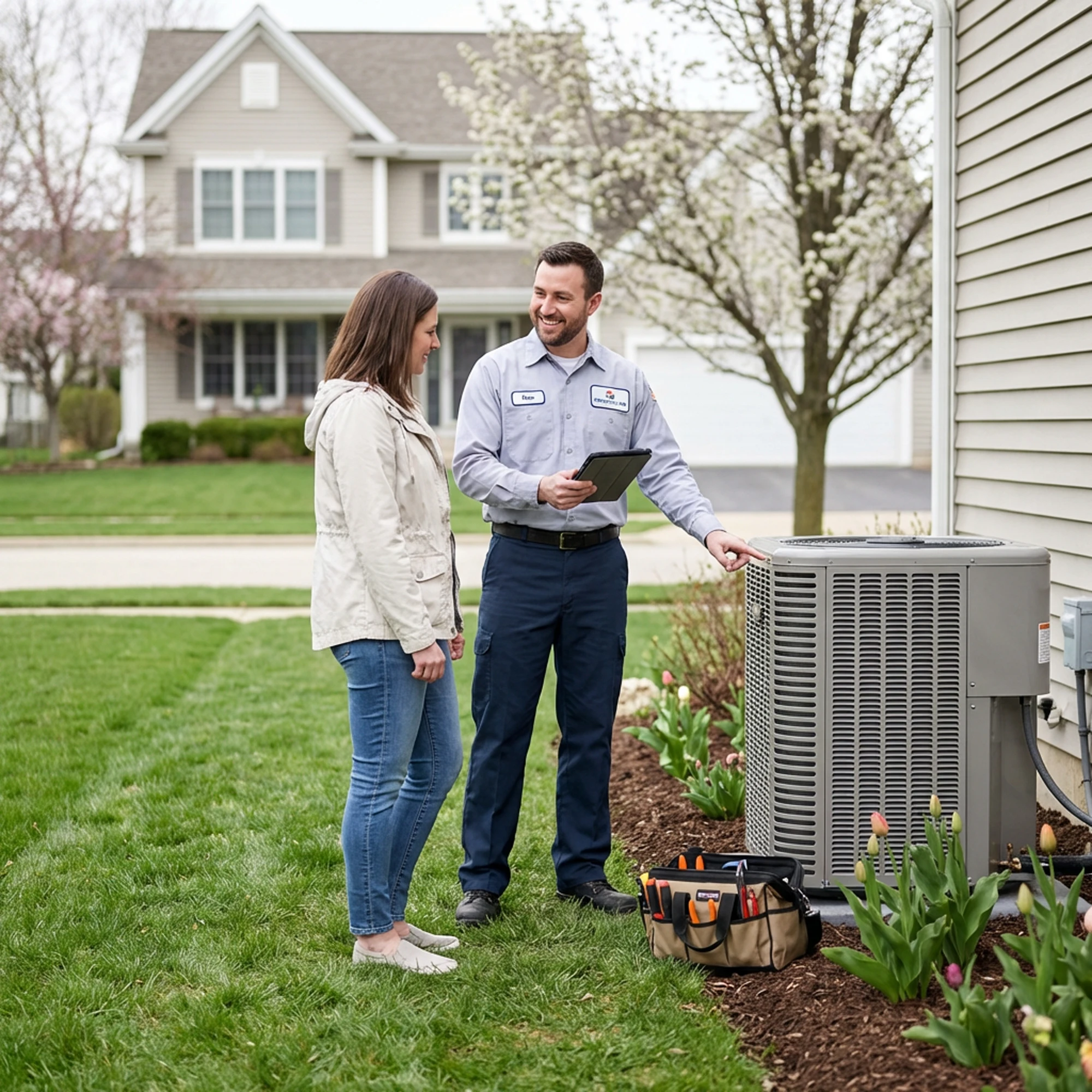
Home Service Seasonal Marketing Calendar

Seasonal Marketing Calendar Strategy for Home Services

Home Service Seasonal Marketing Calendar

Slow seasons rarely happen by accident. In most cases, they are the result of marketing that starts too late.

The phone slows down, and suddenly the company is scrambling. Someone increases the Google Ads budget. Someone else boosts a Facebook post. The owner starts talking about a coupon. A postcard gets rushed out. The website gets blamed. Then, when demand comes back, everyone gets busy again and the planning stops.

That is not strategy. It is a reaction to the calendar.

The companies that stay booked more consistently through the year do something different. They do not wait for demand to appear and then compete for it at the same time as everyone else. They work ahead. They warm up customers before the season changes. They align email, direct mail, paid search, reviews, technician conversations, and follow-up so each channel reinforces the others.

Multi-channel strategy is not about being everywhere. It is about using the right channels, in the right sequence, at the right time, to move customers toward action.

A seasonal marketing calendar is not just a content schedule. It is a revenue planning system.

The Core Principle: Market Before the Market Moves

Every home service company has demand patterns. HVAC has sharper seasonality. Plumbing is more stable but still has weather-driven spikes, remodel cycles, and seasonal service opportunities. Electrical often tracks renovation activity, generator demand, weather events, and broader home improvement trends.

The mistake many contractors make is waiting until the season is already here. By that point, every competitor is saying the same thing at the same time to the same customer.

The better play is to market during the ramp-up window, the two to six weeks before demand peaks.

That is where the leverage lives.

When you get in front of customers before they need you, your message feels timely instead of reactive. Your direct mail lands before everyone else’s. Your email is seen before inboxes fill up with promotions. Your paid search budget is not fighting peak-season auction pressure. Your technicians and CSRs are talking to customers before urgency turns into price shopping.

Seasonal planning works best when channels are coordinated:

  • Direct mail creates awareness and credibility in the home.
  • Email reinforces timing, education, and repeat visibility.
  • Paid search and local search capture intent when interest turns into action.
  • Technician and CSR scripts convert attention into booked work, upgrades, and maintenance plans.
  • Review and follow-up systems turn seasonal demand into long-term customer value.

That is the difference between channel activity and channel integration.

Start With Your Actual Data, Not Generic Advice

Before building a seasonal calendar, look at the last two to three years of monthly revenue, call volume, booked jobs, average ticket, unsold estimates, maintenance plan sales, and review volume.

You are looking for four things:

  • Your peak demand months
  • Your slow or soft months
  • Your ramp-up windows before the peaks
  • Your retention and reactivation opportunities after the peaks

Most contractors already have this data in ServiceTitan, Jobber, or their CRM. The issue is not whether the data exists. The issue is whether anyone has translated it into a marketing plan.

Once you know your demand patterns, you can build a calendar that answers five questions every month:

  1. What are we promoting?
  2. Who is the audience?
  3. Which channels are doing the work?
  4. What action are we trying to create?
  5. How does this month set up the next one?

That last question is the one most companies miss.

The 12-Month Seasonal Marketing Calendar

Q1: January, February, March — Setup and Warm-Up

This is where many contractors lose the year before it starts. Revenue is often softer. The team has breathing room. There is less operational chaos. That makes Q1 one of the most valuable marketing quarters of the year.

January should be used to tighten the foundation. Audit your Google Business Profile. Clean your customer database. Identify customers with no service in the last eighteen to twenty-four months. Pull unsold estimates from the previous six to twelve months. Identify aging systems, expiring maintenance agreements, and customers due for seasonal service.

This is also a strong time to improve the assets that make every other campaign perform better: website service pages, review generation workflows, CSR call scripts, follow-up automation, and technician messaging around maintenance plans and replacement options.

Primary January channels: database segmentation, Google Business Profile optimization, website updates, review outreach, internal scripting, and automation setup.

February is the start of the warm-up period for spring demand. For HVAC, this is when you begin talking about spring AC tune-ups, efficiency, reliability, and getting ahead of the rush. For plumbing, this may include freeze damage follow-up, water heater awareness, sump pump messaging, or early spring inspection offers depending on climate. For electrical, it may involve panel capacity, surge protection, generator readiness, or spring remodeling prep.

The messaging here should not feel overly promotional. February is about awareness and familiarity. A homeowner who sees a useful email, then receives a postcard, then notices your brand again in search results is far more likely to act in March or April.

Primary February channels: email, direct mail to past customers, light paid search support, educational blog content, and organic social reinforcement.

March is where warm-up turns into activation. Maintenance reminders become more direct. Unsold estimate follow-up becomes more relevant. Reactivation campaigns to dormant customers become timely. This is also a strong month to coordinate CSR outbound follow-up with email and mail already in market.

A simple sequence works well here: postcard first, email second, outbound call third, paid search support throughout. Each touchpoint increases familiarity and improves conversion odds when the customer is ready.

The Q1 objective: enter spring with segmented lists, active campaigns, and customers who have already heard from you more than once.

Q2: April, May, June — Activation and Revenue Capture

For many HVAC and plumbing companies, Q2 is where demand begins to accelerate. This is when multi-channel integration matters most because customer intent rises quickly, and the companies with the clearest message and strongest follow-up capture more of the revenue.

April is often the highest-leverage maintenance month of the year. Existing customers should be the priority. This is not the time to rely too heavily on expensive new lead acquisition if your own customer base has not been fully activated first.

If someone had service last year, has not scheduled spring maintenance, and is already familiar with your brand, that household is usually cheaper to convert than a cold lead from search. The economics are simply better.

April campaigns should be coordinated. Direct mail can create urgency in the home. Email can reinforce timing and convenience. Paid search can capture active demand. CSRs should be ready with a consistent script. Technicians should be trained to mention next-step planning and membership opportunities when they are already in the home.

Primary April channels: email, direct mail, paid search, Google Business Profile activity, outbound calling, and in-home technician conversations.

May is when your premium positioning has to hold together across channels. Customers are comparing options. They are researching. They are reading reviews. They are visiting websites. They are hearing what your technicians say in the home.

If your paid ads talk about quality, but your website feels generic, your reviews are stale, and your technician presentation sounds transactional, the whole system breaks down. Multi-channel strategy only works when the brand message is consistent from first impression to final recommendation.

This is a strong month to emphasize differentiation: better process, better communication, better technician experience, better warranties, better documentation, better long-term planning for the homeowner. Not vague claims. Specific reasons to choose you over lower-priced operators.

Primary May channels: website, paid search, local SEO, reviews, technician communication, financing messaging, and estimate follow-up.

June is demand season in many markets. At this point, the question is no longer whether the phone will ring. The question is whether your company is prepared to maximize revenue and relationship value from the calls that come in.

This is where operations and marketing overlap. Speed to contact matters. CSR handling matters. Technician option presentation matters. Review requests matter. Membership enrollment matters. A June lead is not just a dispatch problem. It is a revenue conversion event.

The companies that perform best in June do not just run ads. They turn demand into larger tickets, stronger close rates, more reviews, and more retained customers.

The Q2 objective: convert existing demand efficiently, protect margins, and create strong customer experiences that feed retention in the next quarter.

Q3: July, August, September — Retention, Reputation, and Transition

Summer is profitable for many contractors, but it can also be wasteful. When the team is overwhelmed, follow-up slips. Review requests get missed. Membership conversations are rushed. The company gets through the work but fails to capture the long-term value created by that busy season.

July and August should be treated as reputation and retention months as much as production months. Every completed job is an opportunity for a review, a maintenance plan enrollment, a future replacement conversation, and a referral later in the year.

This is where post-job automation becomes essential. A review request should not depend on someone remembering to send it. A thank-you email should not be optional. A simple follow-up asking if the homeowner has any questions should not feel like an extra. These are core retention mechanisms.

One strong sequence is: completed job, thank-you message, review request, maintenance plan mention, then delayed follow-up for referral or future service. That is multi-channel integration applied after the sale.

Primary July and August channels: SMS or email follow-up, review requests, service reminders, technician enrollment conversations, and referral prompts.

September is one of the most important strategic months of the year because it sits between the summer rush and fall heating demand. Most competitors wait too long to pivot. They stay mentally stuck in summer. The better operators start early.

September is when fall furnace tune-ups, heating inspections, electrical safety checks, winter readiness messaging, and plumbing winterization campaigns should begin. It is also a strong month to work referral campaigns and re-engage satisfied summer customers while the experience is still recent.

A homeowner who had a good service experience in July is much more likely to respond in September than someone who has not heard from you since the invoice was paid.

The Q3 objective: turn busy-season demand into reviews, memberships, referrals, and early fall bookings before competitors fully shift their message.

Q4: October, November, December — Monetization and Next-Year Foundation

Q4 is where disciplined contractors separate themselves. Many companies treat it as the last chance to squeeze out revenue. That often leads to unnecessary discounting and reactive advertising. A stronger approach is to treat Q4 as both a monetization window and a setup period for the following year.

October is a major maintenance and estimate-recovery month. Homeowners feel seasonal urgency. Heating concerns become more real. Deferred decisions from spring and summer start to resurface.

This is a strong time to rework unsold estimates with honest, timely messaging. Not pressure. Not gimmicks. Just relevant follow-up before the season changes. It is also one of the better months for maintenance plan enrollment because customers are already thinking about system reliability.

A coordinated October campaign might include direct mail to unsold estimates and aging systems, email to existing customers, paid search support for active heating demand, and technician reinforcement in the field. Each channel serves a different role, but they all support the same objective.

Primary October channels: direct mail, email, paid search, estimate follow-up, technician conversations, and maintenance plan enrollment.

November is often a relationship month. This is a good time for appreciation messaging, light-touch follow-up, and non-promotional communication that reminds customers they are more than a transaction.

That kind of communication matters more than many contractors realize. When companies only show up to sell, customers learn to ignore them. When companies also show up to educate, follow through, and maintain the relationship, they stay top of mind in a different way.

Primary November channels: email, branded direct mail, light social content, and customer appreciation messaging.

December should be planning month, not drift month. Review monthly performance across the year. Compare revenue patterns to campaign timing. Look at review volume by month. Look at estimate close rates. Look at reactivation performance. Look at maintenance plan sales and retention. Then build next year’s calendar with real dates, target audiences, offers, budgets, and channel roles.

The companies that execute well in February, May, and September usually made those decisions in December.

The Q4 objective: capture remaining seasonal opportunity while building a better, smarter calendar for the year ahead.

How the Channels Work Together

The biggest mistake in seasonal marketing is treating each channel as a separate tactic instead of part of one coordinated system.

Here is a simple example of what integration can look like for a spring HVAC maintenance push:

  • Week 1: direct mail postcard to past customers due for service
  • Week 2: follow-up email with seasonal timing and scheduling prompt
  • Week 2-3: paid search and branded search coverage for active demand
  • Week 3: outbound calls to high-value segments such as maintenance members, aging systems, or dormant customers
  • Throughout: technician reminders in the field, CSR scripting, and Google Business Profile updates supporting the same message

No single touchpoint has to do all the work. The job of the system is to build familiarity, create timing, reinforce trust, and make action easier.

That is what integrated marketing looks like in practice.

The Calendar Gets Smarter When the Customer Data Gets Better

The more organized your customer data is, the more precise your calendar becomes.

Most home service companies can already identify valuable segments such as:

  • Customers with no service visit in 18 to 24 months
  • Systems older than 10 years
  • Unsold estimates from the last 6 to 12 months
  • Maintenance members who missed a scheduled visit
  • Customers who had a repair but may be approaching replacement
  • Recent satisfied customers who are strong referral candidates

That is where campaign performance improves. A message tied to the customer’s actual situation will outperform a generic seasonal promotion almost every time.

“Your system is entering its twelfth year. Here’s what to watch before cooling season starts” is simply more relevant than “Schedule service today.”

Relevance improves response. Better response improves efficiency. Better efficiency improves margin.

This Is a Framework, Not a Fixed Formula

No seasonal calendar should be copied blindly. A company in Phoenix has a different demand curve than one in Minneapolis. A contractor with a heavy commercial mix will not market the same way as a residential replacement-focused company. A business built around memberships and repeat customers will not need the same acquisition intensity as one starting from scratch.

But the principle holds across markets: the companies that plan their marketing around the next demand cycle outperform the ones that react to the current one.

They do not just market more. They market earlier, more intentionally, and with better coordination between channels.

That is the real value of a seasonal marketing calendar. It gives the business a structure for moving from isolated tactics to an integrated system that supports revenue, retention, and long-term customer value across the entire year.

The goal is not just to be visible during peak season. The goal is to shape demand before the peak, stay relevant after the job, and build a company that stays booked more consistently because its marketing is aligned with how customers actually buy.

Seasonal Marketing Calendar Strategy for Home Services Read More »

Wordpress Social Share Plugin powered by Ultimatelysocial
Scroll to Top