
Multi-Channel Marketing for Home Service Companies
A $2.5M HVAC company I spoke with recently was spending just over $16,000 per month on marketing, which is right in the range I typically recommend for established home service companies (roughly 7–10% of revenue). The problem wasn’t the budget. The problem was that every channel was telling a different story.
Google Ads were running one message, direct mail promoted a different offer, social posts highlighted unrelated topics, and emails didn’t match any of it. Each channel was measured independently, each one looked average, and nothing felt strong enough to scale. But the issue wasn’t performance inside the channels; it was the lack of coordination between them.
Why channel-by-channel thinking caps your ROI
Most contractors evaluate marketing the way vendors present it: cost per lead from Google Ads, ROI from a postcard drop, whether social media is “working,” and how email performs as a standalone channel. That approach seems logical on paper, but it ignores how homeowners actually experience marketing in the real world.
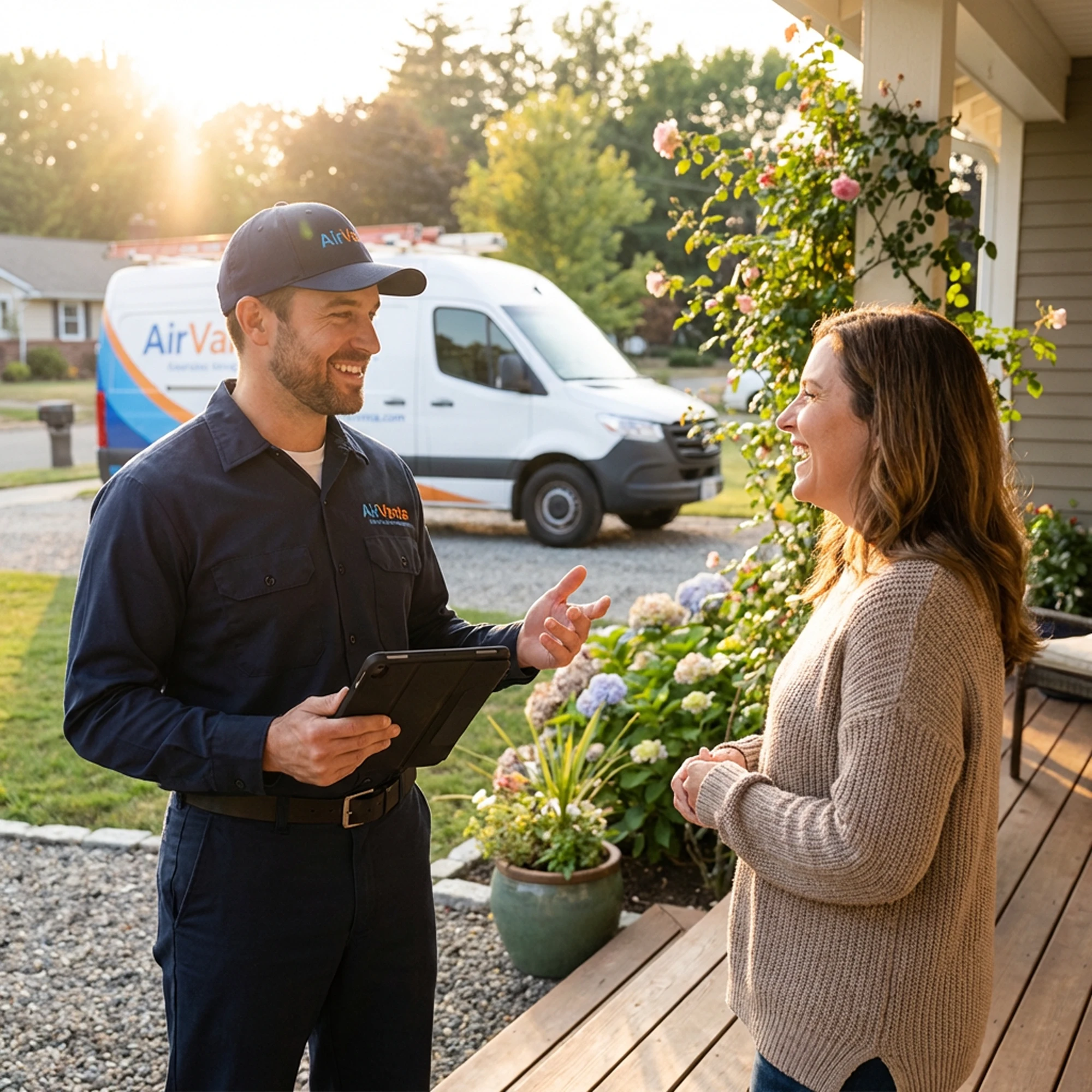
A homeowner might see your truck in a neighbor’s driveway, receive your postcard a few days later, search “AC repair near me” a week after that, and click your ad because your company name feels familiar. If you only credit the Google Ad, you miss what actually happened. The truck created awareness, the mail reinforced familiarity, and the search ad captured intent at the moment they were ready to act.
That wasn’t three separate campaigns. It was one customer journey unfolding across multiple touchpoints. The ceiling most contractors hit with marketing is often the point where isolated channel optimization stops producing meaningful gains, while coordinated strategy starts compounding results.
The economics of coordination
Coordination sounds like a branding concept until you put the math on it. Using the $2.5M HVAC example, an 8% annual marketing budget equals about $200,000 per year, or roughly $16,600 per month. The goal is not to “spend better” in a vague sense; it’s to increase the yield on dollars already being spent.
Here’s a simple model. If disconnected campaigns produce 120 leads per month at a 35% close rate, that’s 42 booked jobs. If coordination improves conversion by even 20% (through stronger familiarity, consistent messaging, and better timing), that same 120 leads close at 42%, which becomes 50 booked jobs.
That’s eight additional jobs per month without increasing lead volume or monthly spend. At an average ticket of $1,200, that’s $9,600 in incremental monthly revenue. Over a year, that’s more than $115,000 in additional revenue from the same marketing budget. In many real businesses, the lift is larger because coordination doesn’t only improve close rate; it also improves call quality, increases average ticket acceptance, and reduces dependence on price-driven leads.
Why coordinated marketing outperforms isolated marketing
Home service marketing is largely a trust game. Consistent exposure across channels creates familiarity, and familiarity reduces perceived risk. When a homeowner sees the same positioning reinforced in multiple places, each touchpoint does more than add incremental value; it strengthens the credibility of the next touchpoint.
This is why a smaller, well-timed direct mail drop supporting a digital campaign often outperforms a larger single-channel spend. A $3,000 mail drop reinforcing a $5,000 search campaign can produce better booked-call economics than an $8,000 search campaign running alone, not because mail is inherently better, but because reinforcement increases trust and improves conversion efficiency.
What real multi-channel coordination looks like
Running multiple channels at the same time is not coordination. It’s parallel spending. Coordination means each channel plays a specific role inside a unified strategy, with consistent positioning, intentional sequencing, and measurement that reflects system performance.
Unified positioning
Your core message has to stay consistent even when the copy changes by channel. If your mail and website emphasize premium diagnostics, clear options, and high-trust service, your ads should not lead with “lowest price in town.” Conflicting positioning attracts the wrong customers and erodes trust with the right ones. Consistency is not about using the same words everywhere; it’s about presenting the same reason-to-believe across every touchpoint.
Defined channel roles
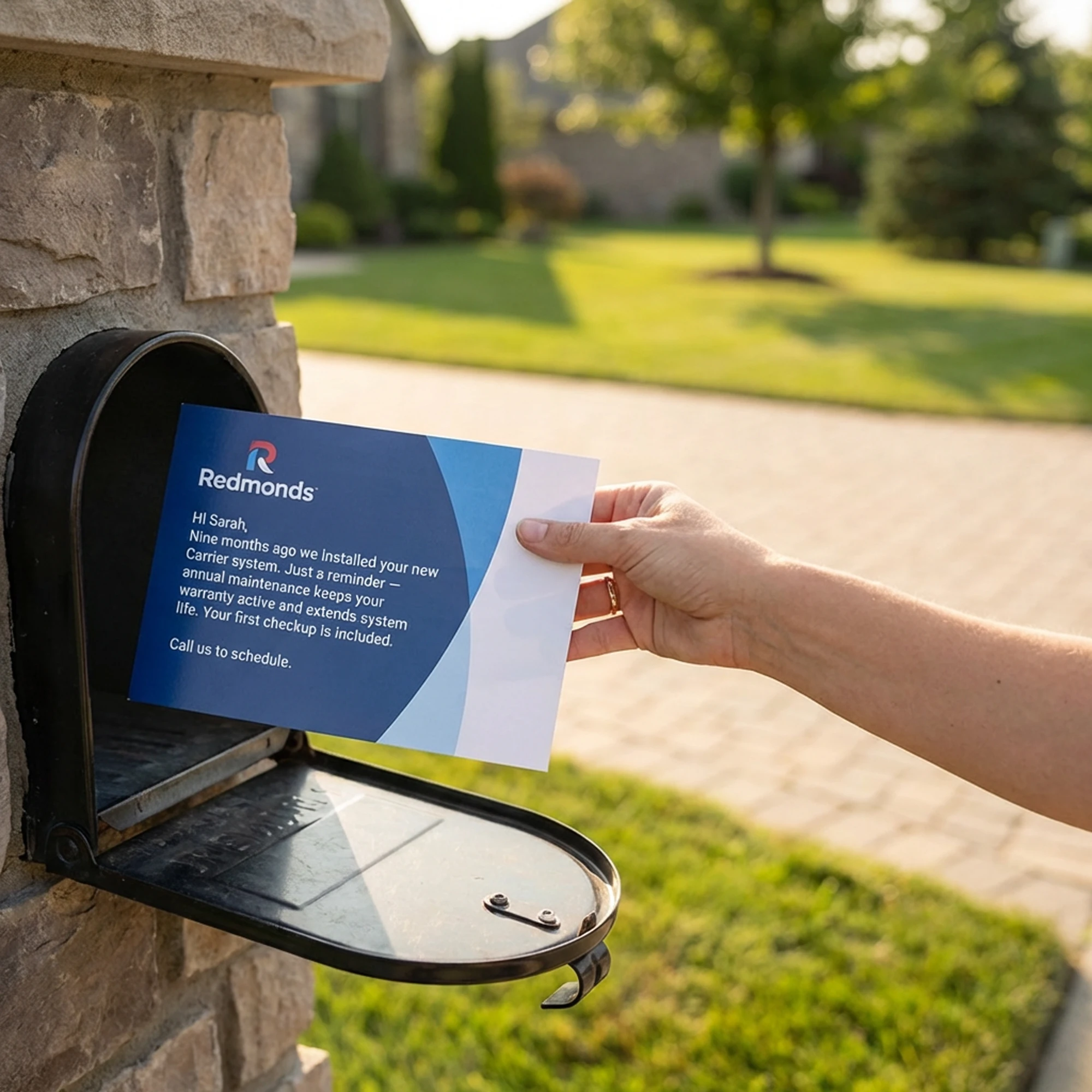
Each channel should do what it’s best at, instead of being expected to carry the entire revenue burden by itself. Direct mail can build geographic familiarity and stay visible in the home. Digital search and LSAs capture active intent. Email protects lifetime value by keeping your company top of mind with existing customers. Social builds familiarity and proof. Your website is where the positioning converges and conversion happens.
When roles are clear, you stop asking, “Did the postcard generate leads?” and start asking, “Did the postcard make our search leads convert better in the same ZIP codes?” That’s the system view.
Intentional sequencing
Timing is where most contractors leave money on the table. If a direct mail drop hits on the 15th, your search and LSA visibility should be emphasized in those same ZIP codes before and after the drop. Messaging should match across the pieces. Social content can reinforce the same theme during the week the mail lands. When the market experiences a coordinated sequence rather than scattered noise, response improves even if the budget stays the same.
System-level measurement
Track channel metrics, but do not manage the business on channel metrics alone. Add system-level measures such as overall cost per lead across channels, overall cost per booked call, call quality, close rate trends during coordinated vs. uncoordinated periods, and customer acquisition cost when multiple channels are active in the same geography.
You don’t need expensive software to start. Unique phone numbers, dedicated landing pages, and simple intake questions (“Where did you hear about us?”) can reveal the patterns that matter. The goal is not perfect attribution; it’s understanding which combinations and sequences drive better outcomes.
The coordination tax (and why it pays back)
Most home service companies don’t coordinate marketing because it requires ownership. Google Ads goes to one vendor, mail goes to another, social gets handed to whoever has time, and no one is responsible for how it all works together. Disconnected execution is easy to delegate. Coordinated strategy requires someone to see the whole system and orchestrate it.
But the payoff is substantial. If coordination improves performance by 20–30%, a $15,000 monthly budget produces $3,000–$4,500 in additional economic output each month. Over a year, that’s $36,000–$54,000 in improved yield without increasing spend. For many companies, the real payoff is larger because improved close rate and stronger positioning also reduce dependency on aggressive discounts and low-quality leads.
Start with two channels and build from there
You don’t need to overhaul everything at once. Start with your two strongest channels, usually digital search (demand capture) and one offline reinforcement method (mail, trucks, neighborhood presence, partnerships). Align the positioning across both, sequence the timing intentionally, and measure system-level results for 60–90 days.
Once you see conversion lift from coordination between two channels, it becomes obvious why isolated channel optimization plateaus. The best ROI rarely comes from finding a new channel; it comes from making your existing channels work together as a system.
The bigger picture
The 7–10% marketing rule isn’t just about spending the right amount. It’s about structuring that spend so it compounds. Disconnected campaigns force you to chase cheaper leads and constantly tweak tactics inside individual channels. Coordinated campaigns improve close rate, increase average ticket acceptance, strengthen trust, and raise lifetime value.
The best marketing ROI in HVAC, plumbing, and electrical doesn’t come from discovering the perfect channel. It comes from designing the system where every channel makes every other channel more effective. If you’re spending five figures per month and haven’t mapped how your channels reinforce each other, there’s likely performance being left on the table, and fixing it usually requires coordination, not more budget.
Multi-Channel Marketing for Home Service Companies Read More »